Pre-eclampsia is one of the most important complications of pregnancy. Until recently, it could only be recognised once it had developed. Advances in first-trimester screening now mean that many women at increased risk can be identified at 11–13 weeks, before the condition develops, and offered treatment that substantially reduces the chance of it occurring early.
At The Pregnancy Clinic, we believe the first-trimester assessment should look beyond the baby's anatomy and chromosomes to the health of the mother and the developing placenta.
Key points
- Screening at 11–13 weeks combines your history, blood pressure, uterine artery Doppler and a blood test for placental growth factor (PlGF) / pregnancy-associated plasma protein-A (PAPP-A).
- It identifies around 75% of women who develop preterm pre-eclampsia, and more of those who need delivery before 34 weeks.
- For women at high risk, aspirin 150 mg at night from 11–14 weeks to 36 weeks reduces preterm pre-eclampsia by about 62%.
- Screening estimates risk; it does not diagnose pre-eclampsia, and routine antenatal checks remain essential.
What is pre-eclampsia?
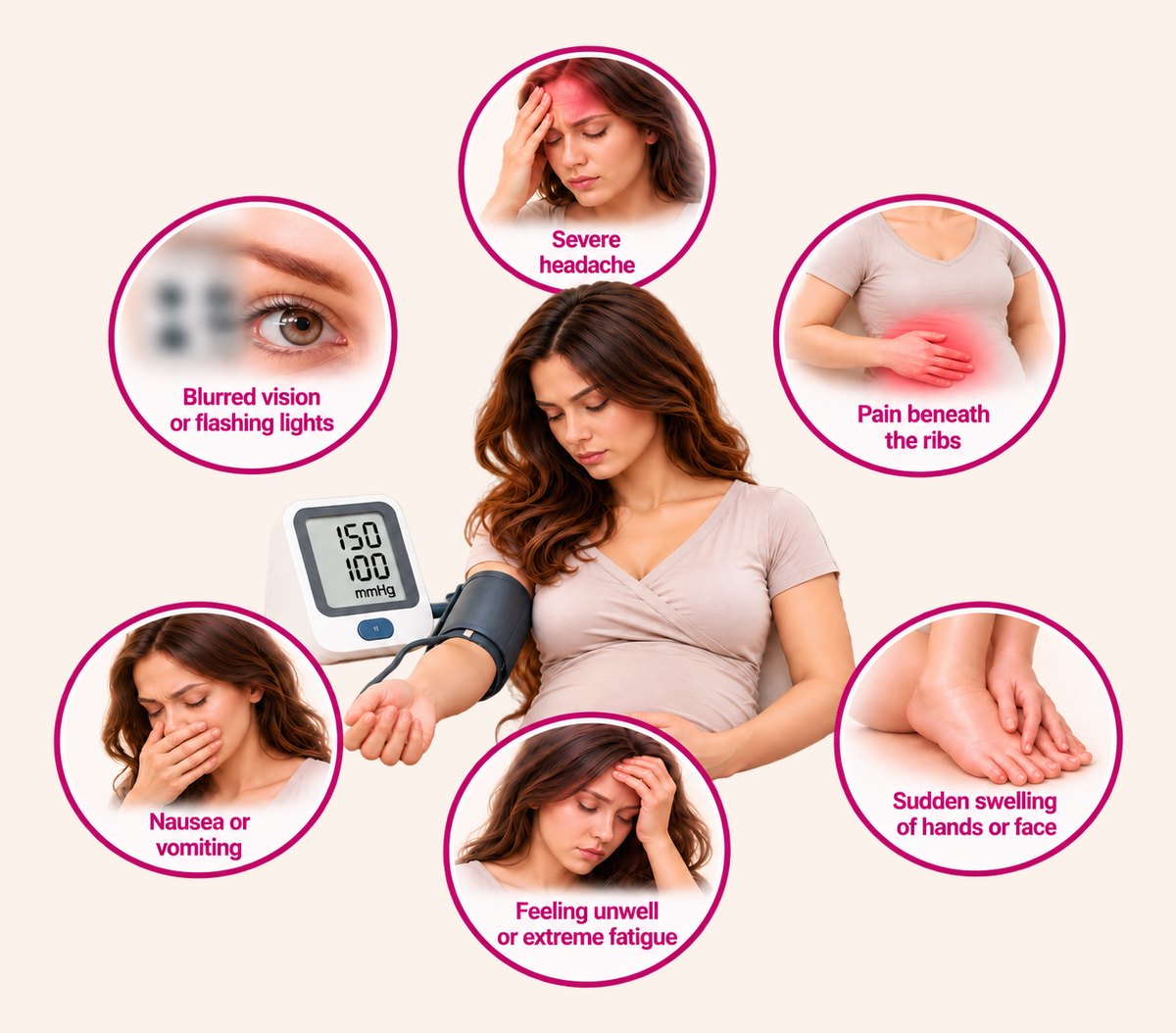
Pre-eclampsia is high blood pressure, usually developing after 20 weeks of pregnancy, together with evidence that the pregnancy is affecting organs such as the kidneys, liver or brain, or the function of the placenta. It affects approximately 2–5% of pregnancies. Symptoms can include a severe headache, blurred vision or flashing lights, pain beneath the ribs, sudden swelling of the hands or face, nausea or vomiting and feeling generally unwell, although pre-eclampsia can also develop without any symptoms.
Pre-eclampsia that requires delivery before 37 weeks is described as preterm pre-eclampsia, and pre-eclampsia that develops at or after 37 weeks as term pre-eclampsia. The earlier in pregnancy it develops, the more severe the consequences tend to be for both mother and baby. Term pre-eclampsia is often relatively mild, whereas preterm pre-eclampsia can cause serious complications, including reduced placental function, poor fetal growth and premature delivery and, in severe cases, seizures (eclampsia), HELLP syndrome or other life-threatening problems.
The only definitive treatment for established pre-eclampsia is delivery of the baby and placenta, although medication and close monitoring help to manage the condition and determine the safest timing of birth. The important advance in modern maternity care is that many women at increased risk can now be identified in the first trimester, before the condition develops.
Why does pre-eclampsia develop?
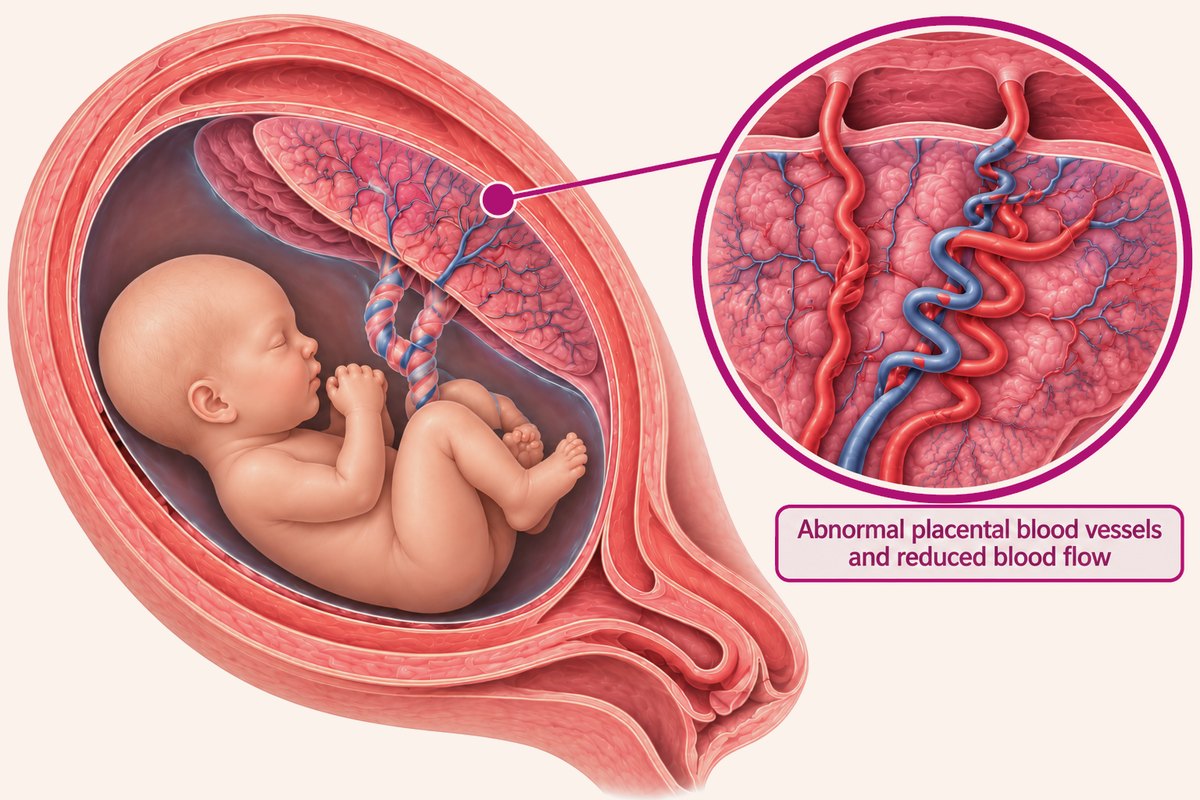
Pre-eclampsia is a complex condition involving the placenta and the mother's cardiovascular and immune systems. In early pregnancy, the placenta develops a network of blood vessels to supply oxygen and nutrients to the baby. In some pregnancies, the development and adaptation of these vessels are less effective, contributing to reduced placental blood flow and the release of substances that affect the mother's blood vessels and organs. Maternal cardiovascular, metabolic and other factors also contribute.
These changes begin long before blood pressure rises or symptoms appear, which is what makes assessment of the risk at 11–13 weeks possible.
Can pre-eclampsia be predicted at 12 weeks?
Yes. Screening between 11 and 13 weeks can identify women with a higher likelihood of developing pre-eclampsia, particularly preterm pre-eclampsia requiring delivery before 37 weeks. The most effective established approach is the Fetal Medicine Foundation (FMF) competing-risks model, which combines information about the mother with measurements of blood pressure, placental blood flow and a blood marker of placental function.
Rather than placing women into categories according to a list of risk factors, it provides an individualised risk, for example 1 in 50 or 1 in 500 for preterm pre-eclampsia. A higher-risk result does not mean that pre-eclampsia will develop; it identifies women who may benefit from preventive treatment and closer monitoring.
How is screening performed?
Screening combines four components, assessed during your 12-week scan appointment:
1. Maternal characteristics and history
Your age, weight and height, previous pregnancies and any history of pre-eclampsia, family history, pre-existing high blood pressure, diabetes or kidney disease, and whether the pregnancy was conceived by IVF. These establish the background risk.
2. Mean arterial pressure (MAP)
Blood pressure is measured in both arms using validated equipment, an appropriately sized cuff and a standardised technique, with you seated and rested. The model uses mean arterial pressure, which reflects both the systolic and diastolic values and is more informative than a single routine reading.
3. Uterine artery Doppler
The uterine arteries supply blood to the uterus and developing placenta. Using colour and pulsed-wave Doppler, we measure the resistance to blood flow, the uterine artery pulsatility index (UtA-PI). Higher resistance is associated with an increased likelihood of placental dysfunction and pre-eclampsia. The measurement is non-invasive and forms part of our first-trimester scan.
For further information, read: Uterine Artery Doppler at 12 Weeks: What Is It and Why Is It Important?
4. Blood test
A maternal blood sample is used to measure a marker of placental function. This can be placental growth factor (PlGF), a protein produced largely by the placenta that plays a role in blood vessel development, or pregnancy-associated plasma protein-A (PAPP-A), which is also measured in combined screening for chromosomal conditions. Lower levels in the first trimester are associated with an increased likelihood of pre-eclampsia.
Combining these four components provides substantially better prediction than maternal history alone.
How accurate is first-trimester screening?
Screening performs best for pre-eclampsia that develops early. In major studies using combined first-trimester screening, approximately 75% of preterm pre-eclampsia was identified at a screen-positive rate of around 10%, with higher detection of pre-eclampsia requiring delivery before 34 weeks. It is less effective at predicting pre-eclampsia that develops close to term.
| Outcome | Approximate detection with combined screening |
|---|---|
| Pre-eclampsia requiring delivery before 34 weeks | 85–90% |
| Pre-eclampsia requiring delivery before 37 weeks | Approximately 75% |
| Pre-eclampsia at or after 37 weeks | Lower detection |
Approximate research estimates at a screen-positive rate of about 10%, not a guarantee for every population. Performance depends on the screening model, threshold and quality of the measurements.
Can pre-eclampsia be prevented?
Yes. In women identified as being at increased risk, starting low-dose aspirin early in pregnancy substantially reduces the risk of preterm pre-eclampsia.
The landmark ASPRE trial showed that aspirin 150 mg each night, started between 11 and 14 weeks and continued until 36 weeks, reduced preterm pre-eclampsia from 4.3% with placebo to 1.6%, an approximately 62% relative reduction. This was a major advance, because it demonstrated that identifying high-risk women in the first trimester leads to an effective preventive intervention. Aspirin does not eliminate the risk entirely, and the trial did not show the same clear reduction in pre-eclampsia at term.
Why timing matters
Aspirin is most effective when started early, ideally before 16 weeks, which is why screening at 11–13 weeks is so valuable. For women at high risk, we recommend aspirin 150 mg at night, ideally started at 12–13 weeks and before 16 weeks, and continued until 36 weeks. Aspirin should not be started without medical advice, particularly if you have an aspirin allergy, a bleeding disorder or another contraindication.
How does this differ from routine NHS risk assessment?
In routine UK antenatal care, risk is assessed from your medical and pregnancy history, and NICE recommends aspirin for women with certain high-risk factors or combinations of moderate-risk factors. This is an important and established approach, but risk factors alone do not identify all women who go on to develop pre-eclampsia. Combined screening adds objective measurements to calculate an individualised risk.
| Feature | Clinical risk-factor assessment | Combined first-trimester screening |
|---|---|---|
| Maternal medical and pregnancy history | Yes | Yes |
| Standardised mean arterial pressure | Not part of the risk calculation | Yes |
| Uterine artery Doppler | No | Yes |
| Blood test (PlGF or PAPP-A) | No | Yes |
| Individualised calculated risk | Not usually | Yes |
A low-risk combined screening result should not automatically override an existing clinical indication for aspirin or additional monitoring.
What does my result mean?
A high-risk result
A high-risk result means that your estimated likelihood is above the screening threshold; it does not mean that pre-eclampsia will develop. We will review the result alongside your medical history and agree a plan, which may include low-dose aspirin, regular blood pressure monitoring, additional scans to assess the baby's growth and placental function, and coordination with your NHS maternity team. Most women with a high-risk result do not develop preterm pre-eclampsia, particularly when preventive measures are taken.
A low-risk result
A low-risk result is reassuring, but it does not mean that pre-eclampsia cannot occur, particularly later in pregnancy. Routine antenatal appointments, blood pressure checks and awareness of symptoms remain essential; screening complements, rather than replaces, standard maternity care.
Can screening also predict poor fetal growth?
Pre-eclampsia and fetal growth restriction share abnormalities of placental development, so uterine artery Doppler and PlGF also provide information about the likelihood of placental complications. However, pre-eclampsia screening is not the same as screening specifically for fetal growth restriction, and a low-risk result does not exclude poor fetal growth. Further growth assessment later in pregnancy may be recommended according to your risk factors and scan findings.
Are there symptoms of pre-eclampsia at 12 weeks?
No. Pre-eclampsia usually develops after 20 weeks, and women having first-trimester screening generally have no symptoms; this is precisely why screening is valuable. Later in pregnancy, seek urgent medical assessment if you develop:
- Severe or persistent headache.
- Blurred vision or flashing lights.
- Severe pain below the ribs, particularly on the right side.
- Sudden swelling of the face, hands or feet.
- Feeling significantly unwell, particularly with nausea or vomiting.
Pre-eclampsia can also develop without noticeable symptoms, which is why blood pressure and urine checks are important throughout pregnancy.
Our approach at The Pregnancy Clinic
Pre-eclampsia screening is integrated into our consultant-led 12-week assessment. It includes a detailed review of your medical and obstetric history, standardised blood pressure measurements, uterine artery Doppler during the scan and a blood test for PlGF or PAPP-A, with an individualised risk calculation using the FMF model.
We consider the result in the context of your whole pregnancy, rather than as an isolated number. Where an increased risk is identified, we advise on aspirin and appropriate follow-up, including growth scans, and share our recommendations with your NHS maternity team.
The greatest benefit of screening is not simply predicting a complication: it is creating an opportunity to prevent it.
Related pregnancy guides
Frequently asked questions
When is pre-eclampsia screening done?
Combined first-trimester screening is performed at 11–13 weeks, at the same appointment as the 12-week scan, so that aspirin can be started before 16 weeks if needed.
What tests are involved in pre-eclampsia screening?
Screening combines your medical history and characteristics, mean arterial pressure, uterine artery Doppler on ultrasound and a blood test for placental growth factor (PlGF) or PAPP-A.
How accurate is pre-eclampsia screening at 12 weeks?
Combined screening identifies around 75% of women who develop preterm pre-eclampsia, and a higher proportion of those needing delivery before 34 weeks, at a screen-positive rate of about 10%.
Does aspirin prevent pre-eclampsia?
In the ASPRE trial, aspirin 150 mg at night from 11–14 weeks to 36 weeks reduced preterm pre-eclampsia by about 62% in women identified as high risk.
Should I take aspirin without screening?
Aspirin should only be taken on medical advice. NICE recommends it for women with specific risk factors; screening helps identify others who may benefit.
Does a low-risk result mean I will not get pre-eclampsia?
No. A low-risk result is reassuring, but pre-eclampsia can still develop, particularly near term, so routine blood pressure checks remain essential.
Pre-eclampsia screening at The Pregnancy Clinic
At The Pregnancy Clinic, our consultant-led first-trimester assessment combines a detailed scan of your baby with an individualised evaluation of your own pregnancy risks, including screening for pre-eclampsia using the Fetal Medicine Foundation model.
Where an increased risk is identified, we provide clear advice about preventive treatment and follow-up, and coordinate our recommendations with your NHS maternity team, helping you make informed decisions about your ongoing care.
Book a specialist first-trimester assessment →This guide provides general information and does not replace personalised medical advice. Aspirin and other preventive treatments should only be used following appropriate clinical assessment. The Pregnancy Clinic provides planned appointments only; if you have symptoms of pre-eclampsia or any urgent concern, please contact your maternity unit, NHS 111 or your GP immediately.
Clinical references
- Akolekar R, Zaragoza E, Poon LC, Pepes S, Nicolaides KH. Maternal serum placental growth factor at 11+0 to 13+6 weeks of gestation in the prediction of pre-eclampsia. Ultrasound Obstet Gynecol. 2008;32(6):732–739.
- Akolekar R, Syngelaki A, Poon L, Wright D, Nicolaides KH. Competing risks model in early screening for preeclampsia by biophysical and biochemical markers. Fetal Diagn Ther. 2013;33(1):8–15.
- O'Gorman N, Wright D, Syngelaki A, Akolekar R, Wright A, Poon LC, Nicolaides KH. Competing risks model in screening for preeclampsia by maternal factors and biomarkers at 11–13 weeks gestation. Am J Obstet Gynecol. 2016;214(1):103.e1–103.e12.
- Rolnik DL, Wright D, Poon LC, O'Gorman N, Syngelaki A, de Paco Matallana C, Akolekar R, et al. Aspirin versus placebo in pregnancies at high risk for preterm preeclampsia. N Engl J Med. 2017;377(7):613–622.
- Tan MY, Syngelaki A, Poon LC, Rolnik DL, O'Gorman N, Delgado JL, Akolekar R, et al. Screening for pre-eclampsia by maternal factors and biomarkers at 11–13 weeks' gestation. Ultrasound Obstet Gynecol. 2018;52(2):186–195.
- Poon LC, Wright D, Thornton S, Akolekar R, Brocklehurst P, Nicolaides KH. Mini-combined test compared with NICE guidelines for early risk-assessment for pre-eclampsia: the SPREE diagnostic accuracy study. Efficacy Mech Eval. 2020;7(8). NIHR Journals Library.
- National Institute for Health and Care Excellence. Hypertension in pregnancy: diagnosis and management (NG133).
- Fetal Medicine Foundation. Pre-eclampsia screening and risk assessment.