Third trimester · 28 to 36 weeks · Sevenoaks, Kent
Growth Scan (28–36 Weeks)
Often called the growth and well-being scan. A consultant-led scan that checks how your baby is growing in the later stages of pregnancy and assesses blood flow, fluid, position and the placenta, helping to plan safely for birth.
- 1-hour consultant-led appointment
- Estimated weight and growth centile
- Umbilical and brain Doppler blood flow

Medically reviewed by Professor Ranjit Akolekar, MBBS, MD (Res), MRCOG, Consultant in Fetal Medicine and Obstetrics · Last reviewed October 2026
Growth & Doppler scan from £250
Reassurance about your baby’s growth and well-being in late pregnancy. Your growth scan includes:
- 1-hour consultant-led appointment
- Estimated weight and growth centile
- Umbilical and brain Doppler blood flow
- Fluid, position and placenta assessed

What your growth scan includes
A detailed assessment of your baby’s growth, well-being and placental function.
Growth and estimated weight
Your baby’s measurements and estimated weight, plotted on a growth chart and compared with any previous scans.
Doppler blood flow
Blood flow in the umbilical cord and your baby’s brain (cerebroplacental ratio), reflecting how well the placenta is working.
Amniotic fluid
The amount of fluid around your baby, an important indicator of your baby’s well-being and kidney function.
Your baby’s position
Whether your baby is head-down, breech or lying across the womb, which helps with planning for birth.
The placenta
Where the placenta lies, confirming that it is clear of the neck of the womb before birth.
Anatomy and development
A further look at your baby’s anatomy and development, as some features can only be seen later in pregnancy.
Choose your growth scan
Clear prices, with every scan performed by a consultant.
| Option | What is included | Price |
|---|---|---|
| Growth & Doppler scan28–36 weeks | Growth, estimated weight, umbilical and brain Doppler blood flow, amniotic fluid, position and placenta, with a written report and images | £250 |
| Late pregnancy review36–40 weeks | Growth, your baby’s position and presentation, and placental well-being, to help plan for birth | £300 |
| Twin pregnancyAny scan above | Each baby is assessed individually, so twin scans take longer | +£100 |
Insured and self-pay patients welcome. See all pregnancy scan prices →
Why scan in the third trimester?
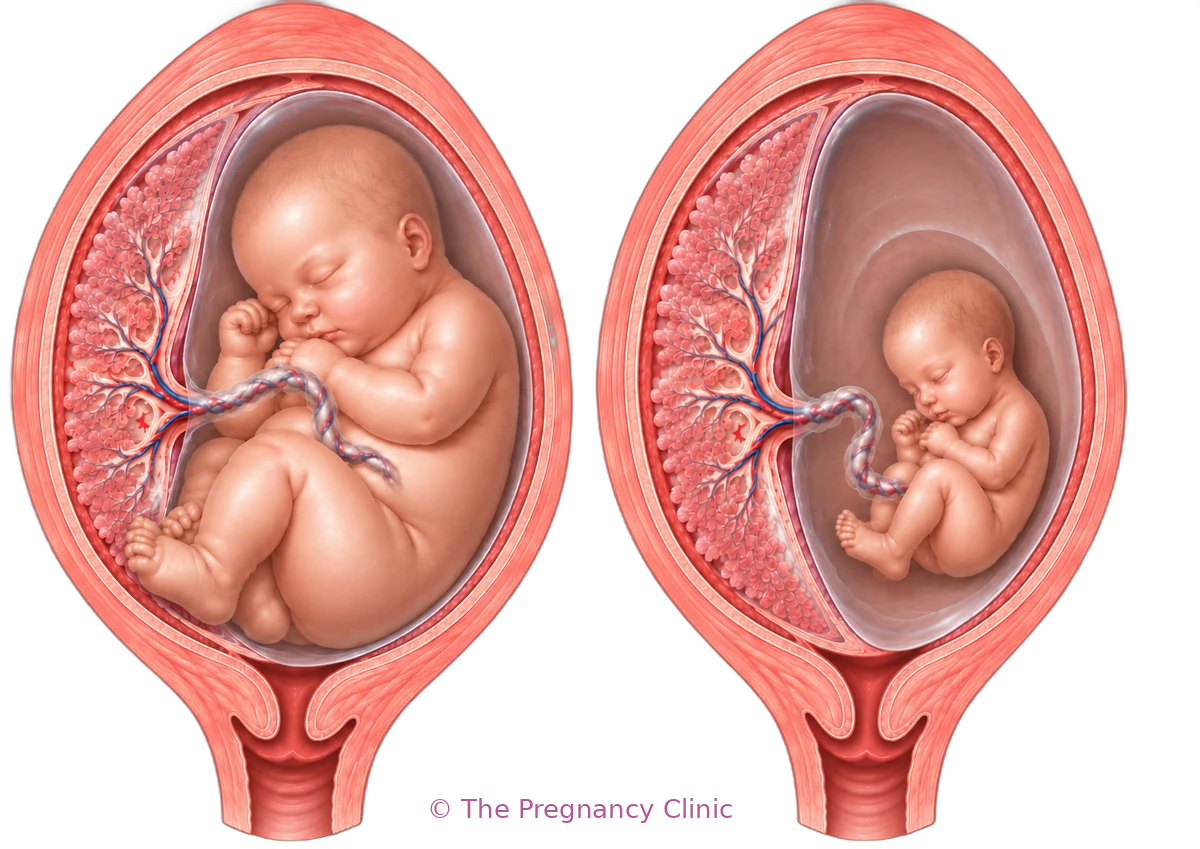
A normal 20-week scan cannot tell you how your baby will grow.
The 12- and 20-week scans date your pregnancy, screen for genetic conditions and assess your baby’s development, ruling out most major birth defects. But things can change later in pregnancy, so a review in the third trimester is essential to confirm your baby’s continued health and well-being.
A third-trimester scan helps to:
- Check your baby’s growth, as up to 50–70% of small and large babies can be missed without an ultrasound scan
- Confirm your baby’s lie and presentation at 36 weeks
- Assess your baby’s well-being with Doppler, which is sometimes the only sign of a failing placenta when growth is still normal
- Identify some conditions that only become apparent in the third trimester
- Inform a safe, personalised plan for delivery
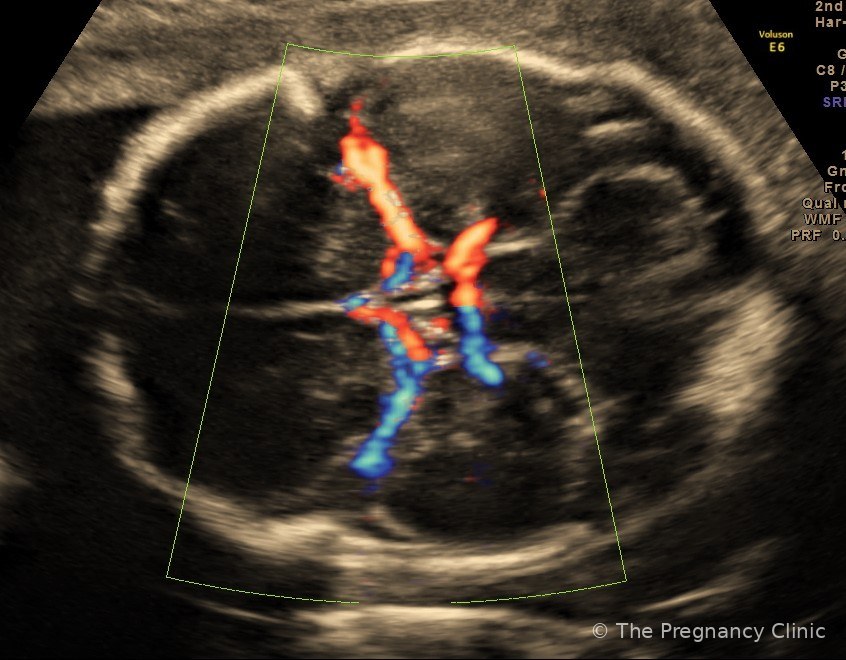 Brain (middle cerebral artery) Doppler
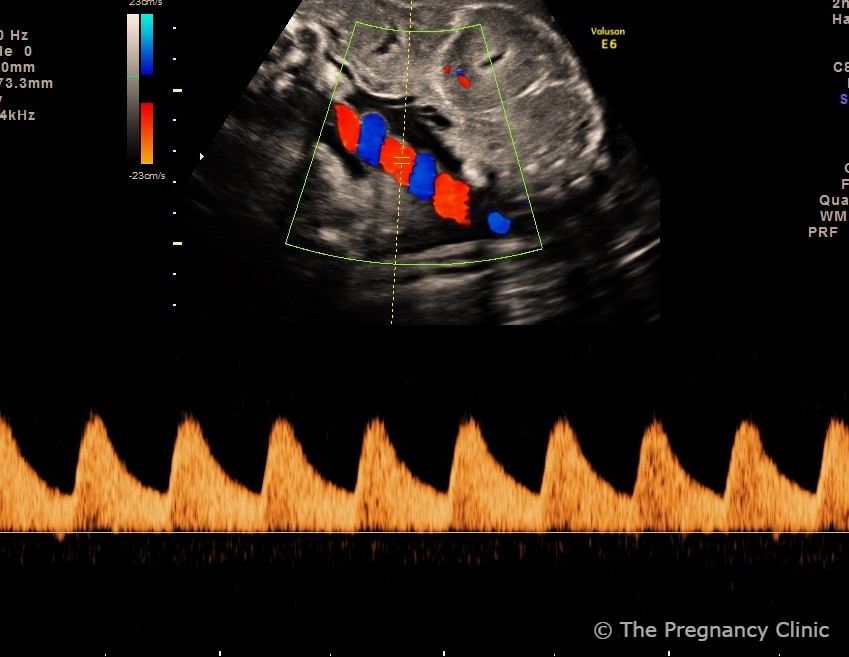 Umbilical artery Doppler
Our growth scan assesses your baby, the placenta and blood flow together, giving you meaningful reassurance
in the final stages of your pregnancy.
If your baby is large or small
Expert, unhurried support from a fetal medicine specialist.
Most growth scans are reassuring. If your baby measures small or large, your consultant will explain what the findings mean in the context of your scan, your history and your baby’s blood flow, and agree the next steps with you.
- Distinguishing a healthy, constitutionally small baby from one affected by placental problems
- Assessing how big your baby is, and what it means for your plans for delivery
- Follow-up growth and Doppler scans at the right interval, usually every 2–3 weeks
- Advice on the timing and mode of birth, coordinated with your NHS maternity team
- A second opinion consultation + scan if you have concerns about a finding from a scan elsewhere
Your growth scan appointment
One unhurried hour with your consultant.
Before your scan
No special preparation is needed. Please bring your previous scan reports and your maternity notes.
During your scan
A detailed assessment of growth, blood flow, fluid, position and placenta, explained as we go.
After your scan
A clear explanation of your scan findings, and a personalised plan for the rest of your pregnancy.
Every growth scan includes
- A 1-hour appointment with a consultant
- Estimated weight plotted on a growth chart
- Umbilical and brain Doppler blood flow
- A printed and electronic report
- Printed scan images and digital images sent to your phone
- 3D and 4D images at no extra cost, when your baby’s position allows
- A copy of your report for your GP or midwife, if you give us their email
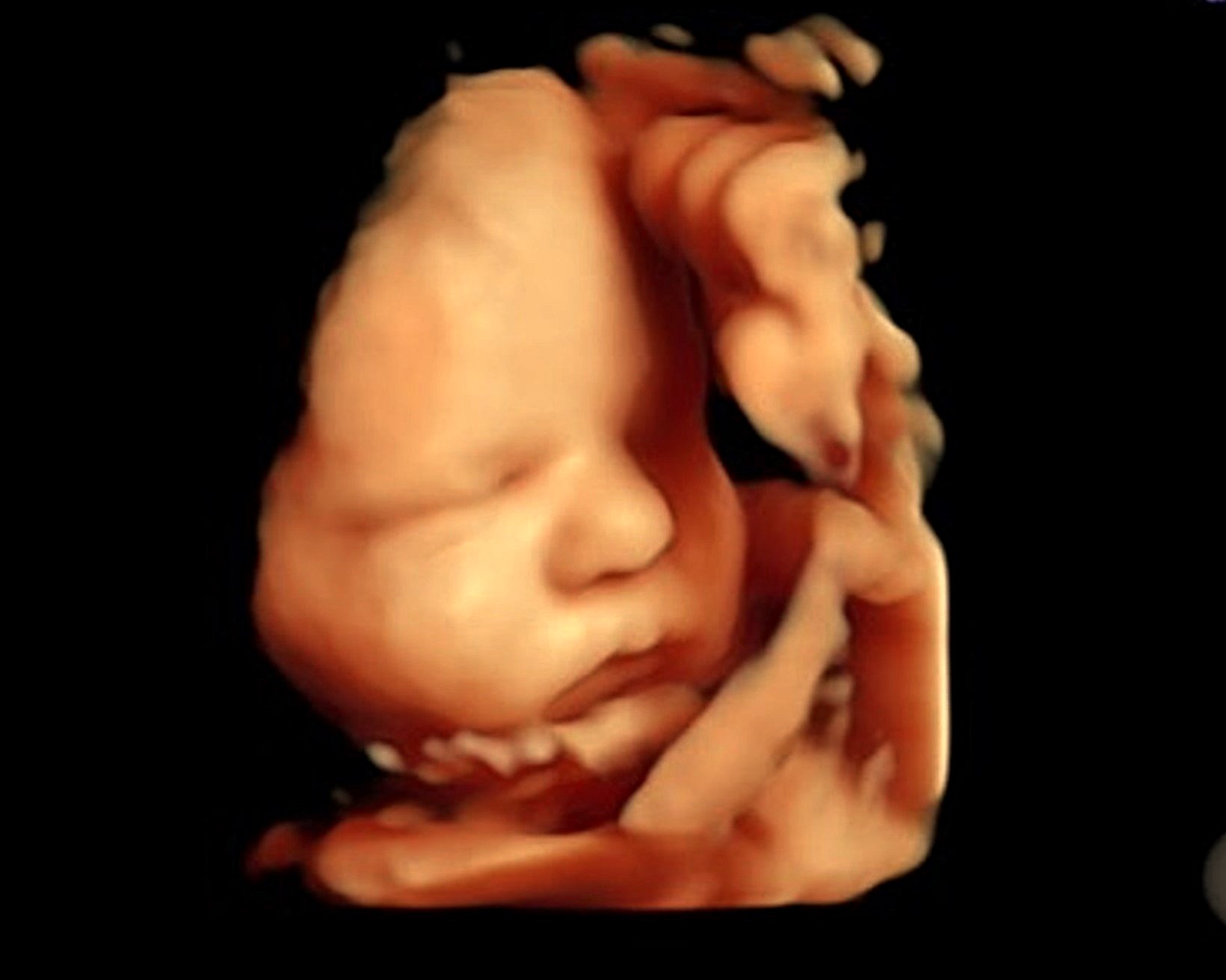
Your scan journey
Where the growth scan fits in your pregnancy.
Prefer everything planned for you? See our scan packages →
Why families trust us
Consultant-led care, recommended by our patients.
Led by Professor Ranjit Akolekar, Consultant in Fetal Medicine and Obstetrics, with over 25 years’ experience in high-risk pregnancy and more than 250 published studies. Read more →
What our patients say
Ready to book your growth scan?
Health insurance and self-pay accepted · No GP referral needed
Growth scan: your questions answered
When should I have a growth scan?
Growth scans are usually performed between 28 and 36 weeks of pregnancy. A single scan at around 36 weeks helps plan for birth, while scans at 28, 32 and 36 weeks are recommended if there is an increased risk of growth problems or a previous concern.
What does the growth and Doppler scan check?
The scan estimates your baby’s weight and plots it on a growth chart, assesses blood flow in the umbilical cord and your baby’s brain, measures the amniotic fluid, confirms your baby’s position and the position of the placenta, and takes a further look at your baby’s anatomy.
How long is the appointment, and what will I receive?
The appointment lasts 1 hour. You will receive a printed and electronic report, printed scan images and digital images sent to your phone, and 3D and 4D images at no extra cost when your baby’s position allows, with a full explanation from your consultant.
I had a normal anatomy scan at 20 weeks. Do I need a growth scan?
A normal anatomy scan is reassuring, but it cannot predict how your baby will grow. At 20 weeks most babies are a similar size, and problems with growth or placental function usually develop later. A third-trimester scan is the most reliable way to identify them.
What determines how my baby grows?
Your baby’s growth depends mainly on two things: growth potential, which is influenced by the parents’ build and genetics, and how well the placenta transfers oxygen and nutrients. A growth scan with Doppler helps to tell these apart.
What are Doppler tests and why are they important?
Doppler ultrasound measures blood flow. Flow in the umbilical artery reflects how well the placenta is working, and flow in the middle cerebral artery shows how your baby is adapting. Together, as the cerebroplacental ratio, they help guide monitoring and the timing of birth.
What if my baby is small or large?
Many babies who measure small or large are healthy and simply following their own growth pattern. Your consultant will interpret the findings alongside blood flow, fluid and your history, and recommend follow-up scans or a plan for birth if needed.
Why is the amount of amniotic fluid important?
Amniotic fluid reflects your baby’s well-being and kidney function. Reduced fluid can be associated with placental problems, while increased fluid is often a normal variation but may occasionally be linked to diabetes or other conditions. Any variation is interpreted with the rest of your scan.
When is my baby’s position checked?
Your baby’s position can change until late pregnancy, so it is most useful to check it at around 36 weeks. If your baby is breech, there is still time to discuss your options with your maternity team, including turning the baby (external cephalic version).
What should I do if I have an urgent concern?
We provide planned appointments only. If you have reduced baby movements, pain, bleeding, contractions, leakage of fluid or any other urgent concern, please contact your local NHS maternity unit straight away. In a life-threatening emergency, call 999.
More answers in our growth scan FAQs.
Prefer to speak to us?
Our patient care team is happy to answer your questions and help you choose the right appointment.
01732 647072Call us07572 929888Message us on WhatsAppcare@thepregnancyclinic.comEmail our care teamOpening hoursTuesday 9am–8pm · Thursday 9am–5pm · Saturday 9am–7pm. Other days on request.
Find usThe Highland Suite, Great Hollanden Business Centre, Mill Lane, Underriver, Sevenoaks, Kent TN15 0SQ
Directions and parking →