
Specialist IVF Pregnancy Care
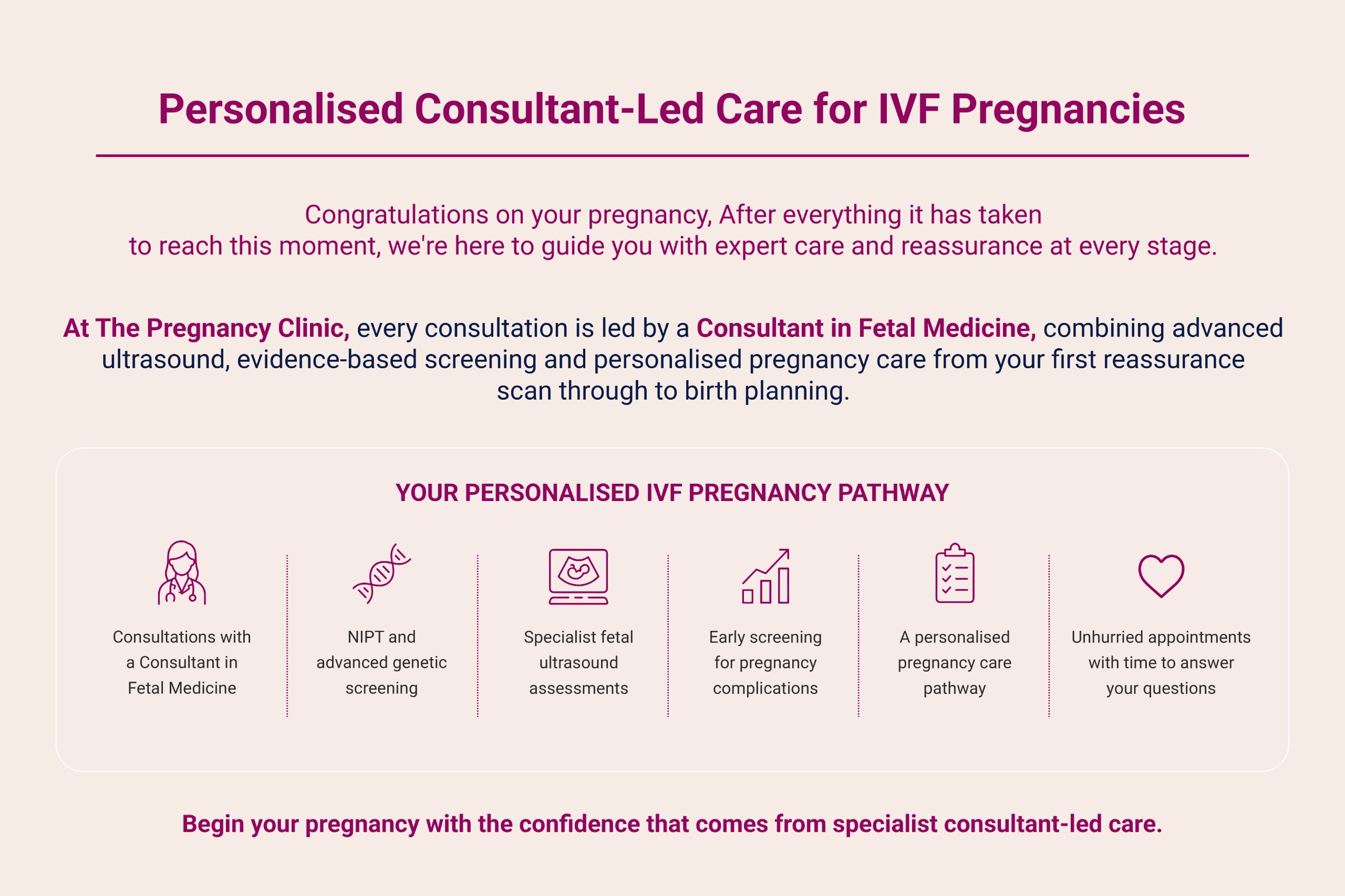
Consultant-led pregnancy care following IVF, ICSI and assisted conception – from your first pregnancy scan through specialist screening, antenatal surveillance and birth planning.
Why personalised care matters after IVF?
Although most IVF pregnancies progress normally, some have a slightly higher chance of complications such as placental disorders, pre-eclampsia, gestational diabetes and fetal growth abnormalities. Personalised specialist assessment allows appropriate screening and surveillance throughout pregnancy, while providing reassurance when pregnancy is progressing normally.
Specialist screening for maternal and fetal complications
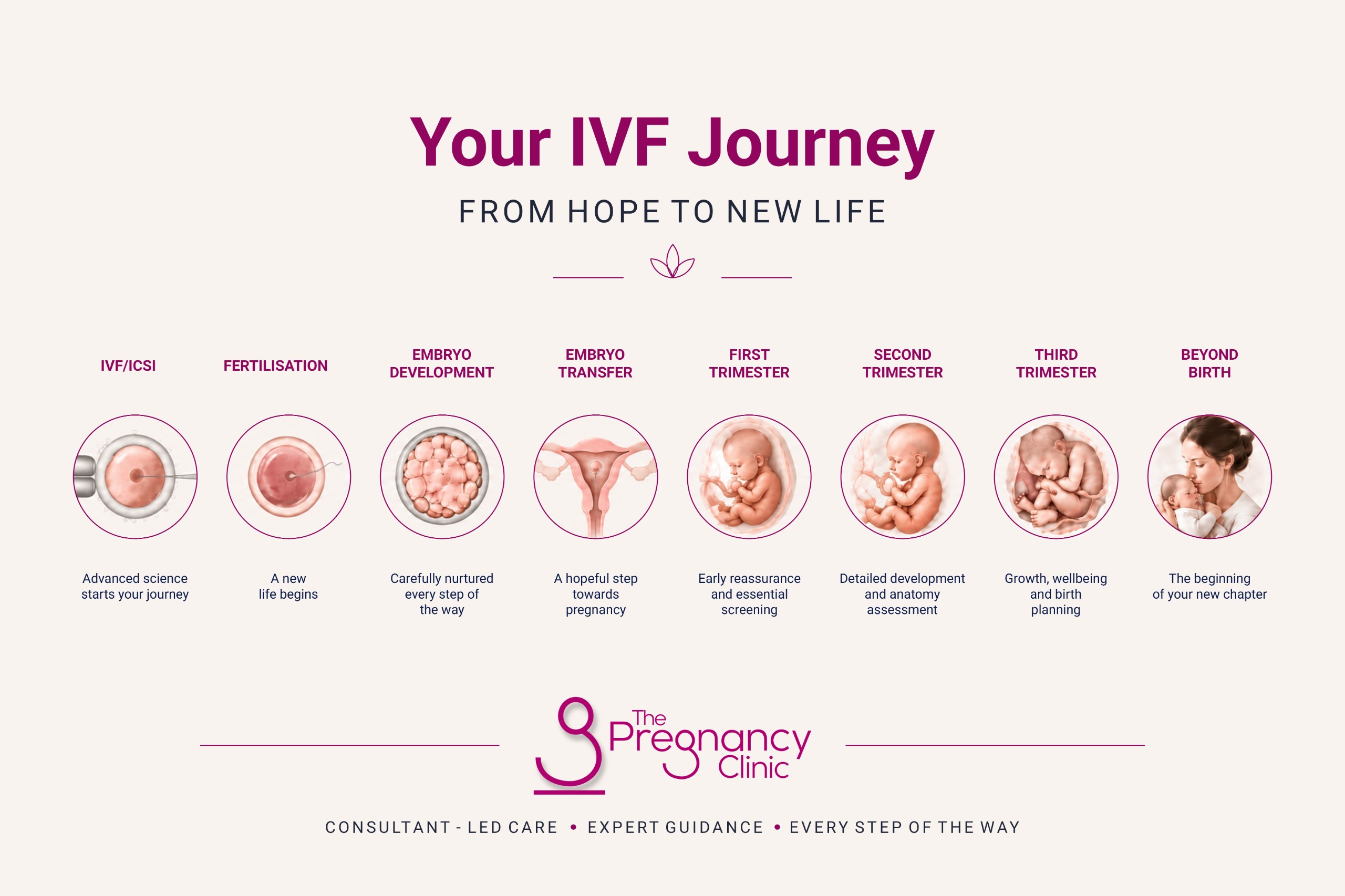
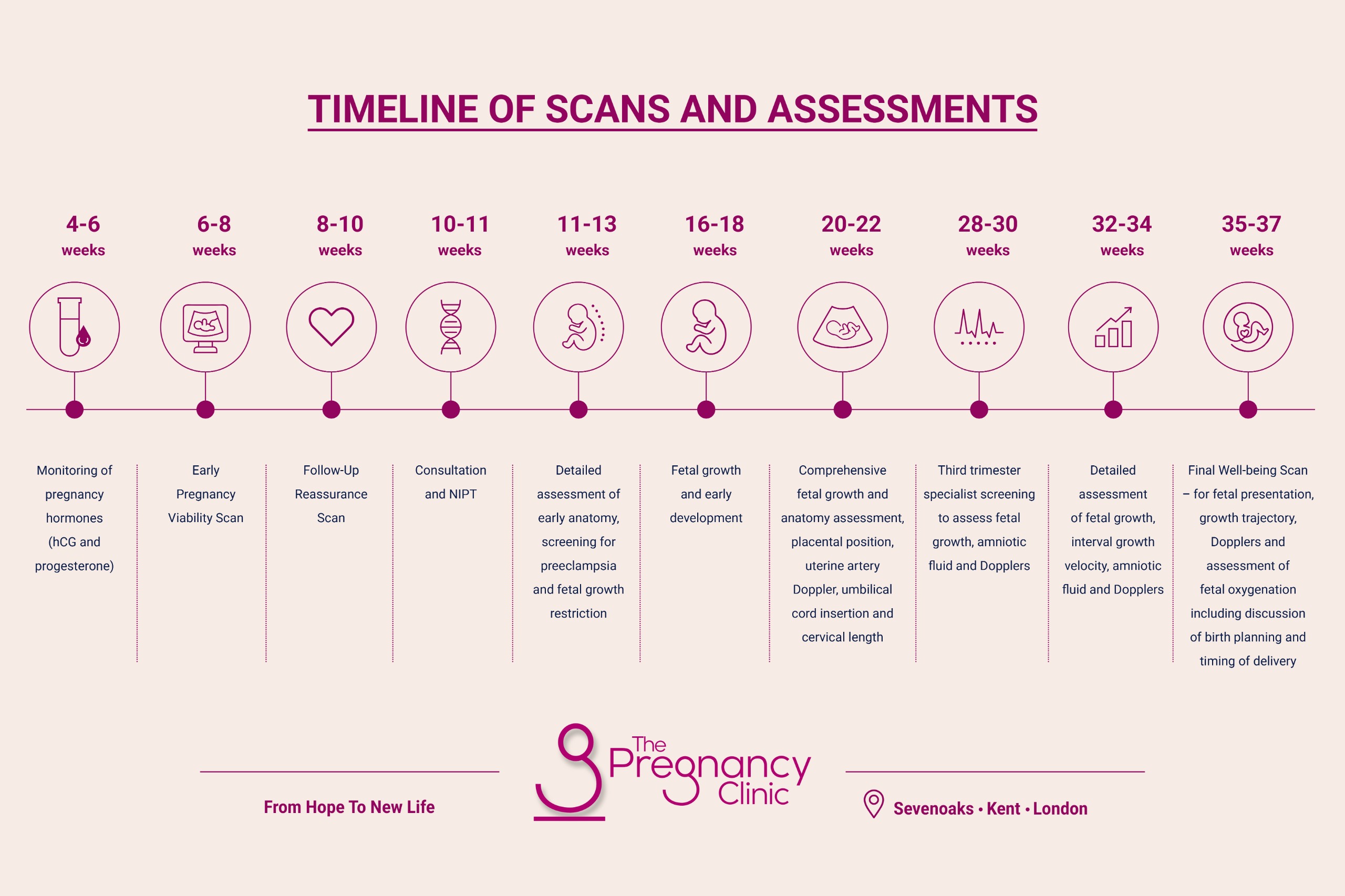
Your IVF Pregnancy Journey, expertly supported
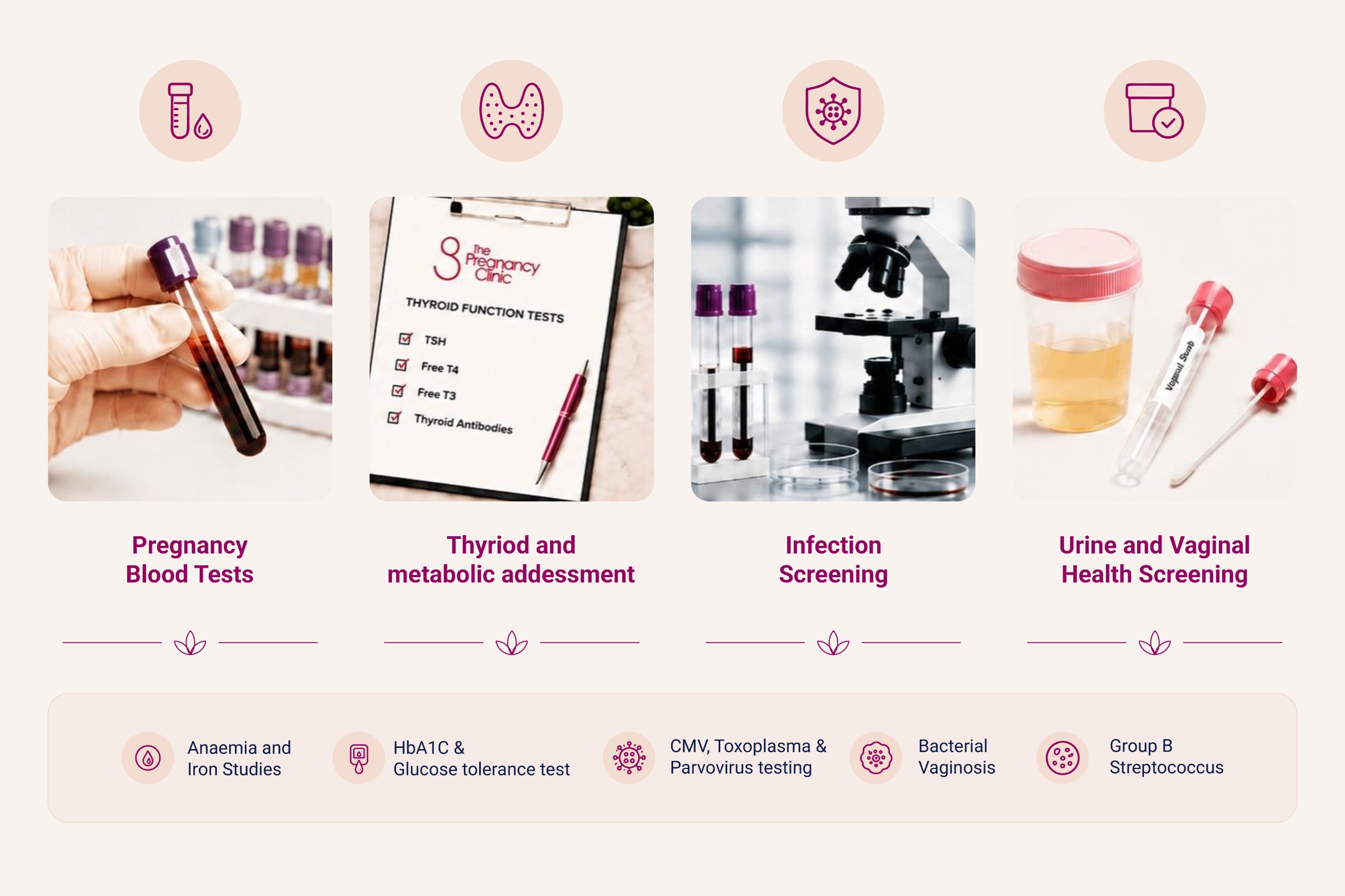
Additional investigations to support your IVF pregnancy
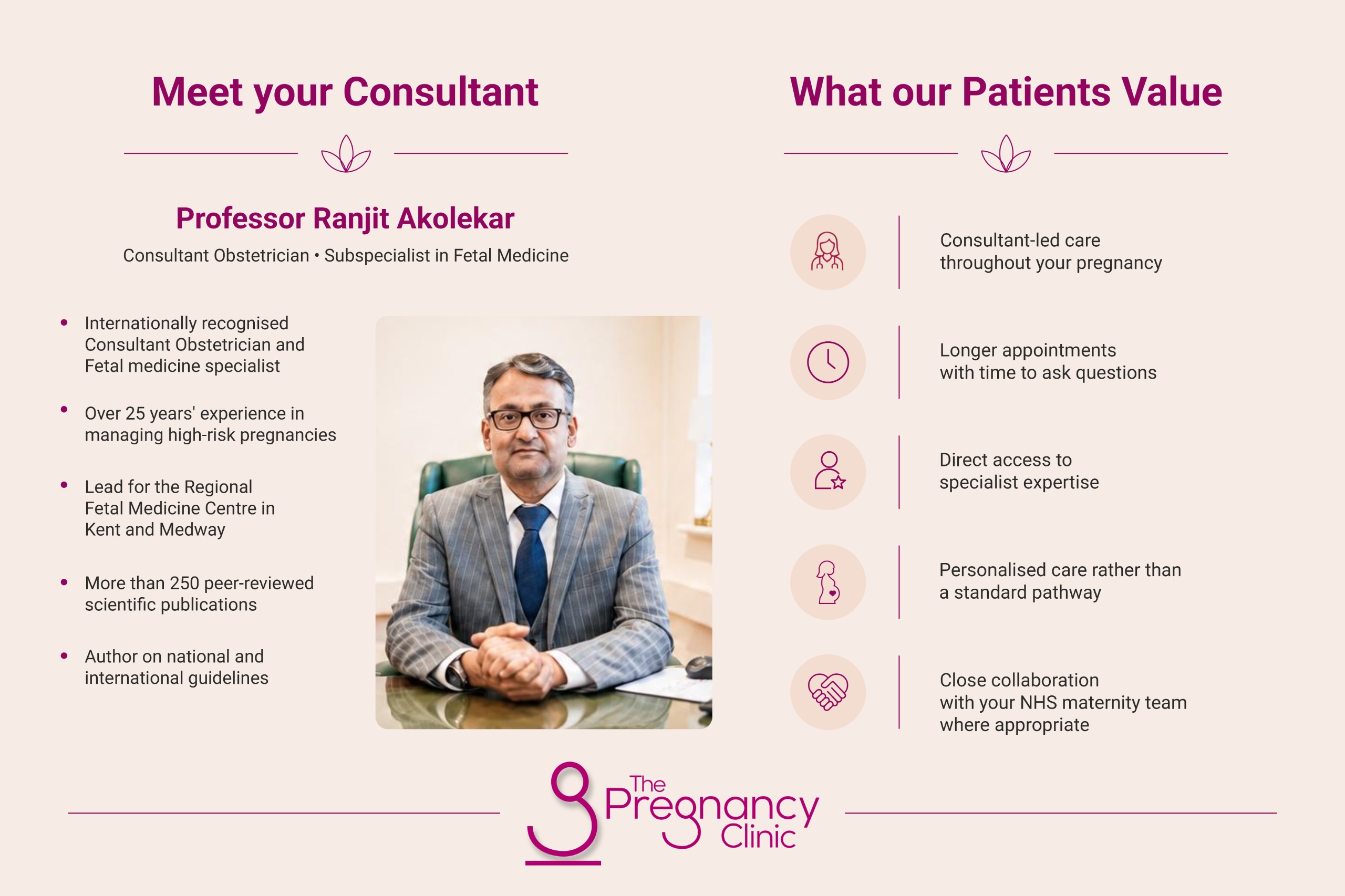
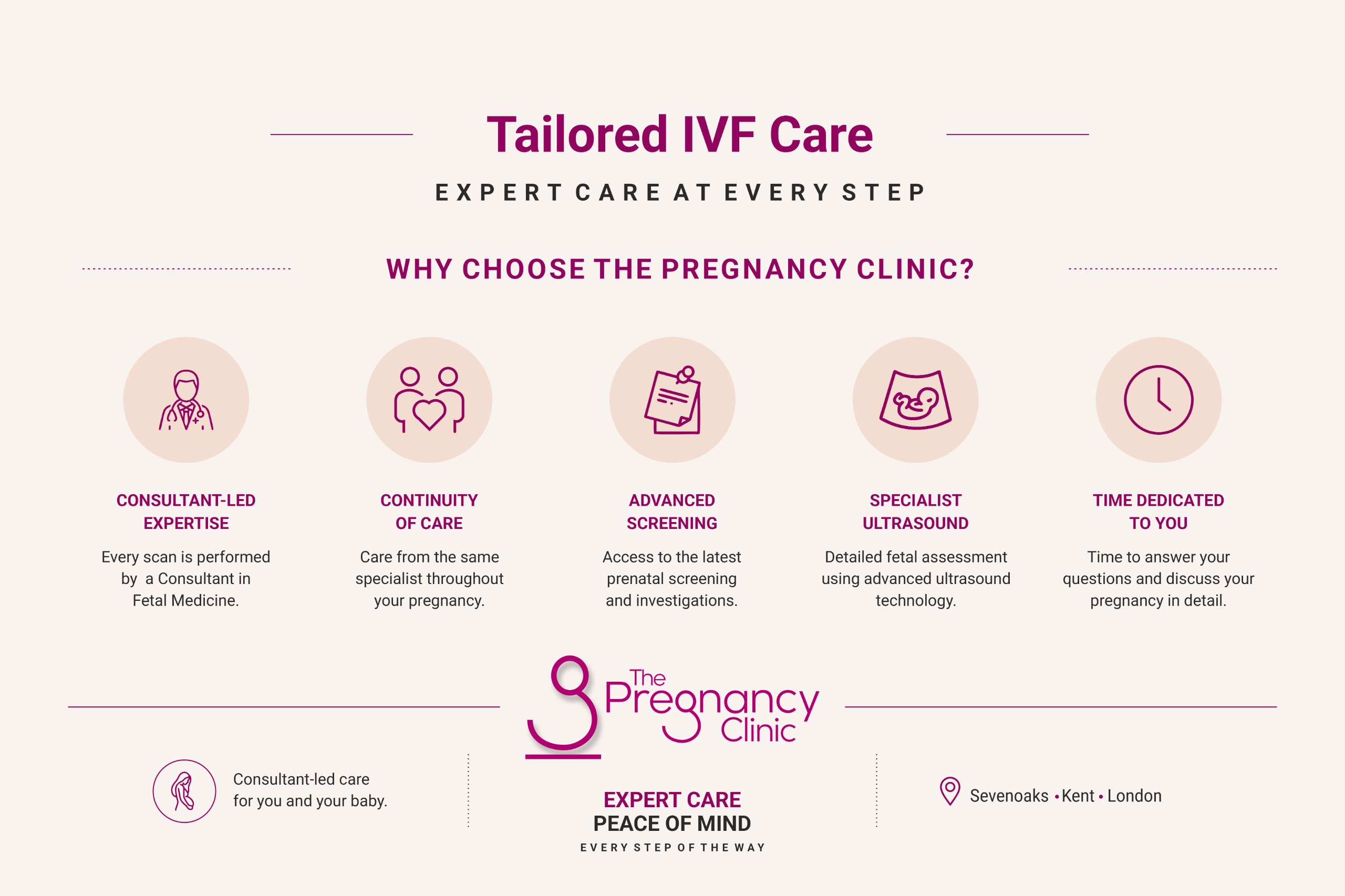
Specialist Care for Every Stage of Your IVF Pregnancy
From your first reassurance scan to planning the safest birth for your baby, we provide personalised consultant-led care designed specifically for pregnancies conceived through assisted reproduction.
FAQs
We usually recommend an early pregnancy viability scan between 6 and 8 weeks of pregnancy. This confirms that the pregnancy is developing within the uterus, assesses the baby’s heartbeat, establishes accurate dating and checks whether there is a singleton or multiple pregnancy. For many couples, this is an important milestone that provides early reassurance following fertility treatment.
Although most IVF pregnancies progress normally, they have a slightly higher risk of certain pregnancy complications. Additional ultrasound assessments and investigations allow closer monitoring of fetal growth, placental development and maternal wellbeing throughout pregnancy. These scans provide reassurance when everything is progressing normally and enable earlier identification of any concerns should they arise.
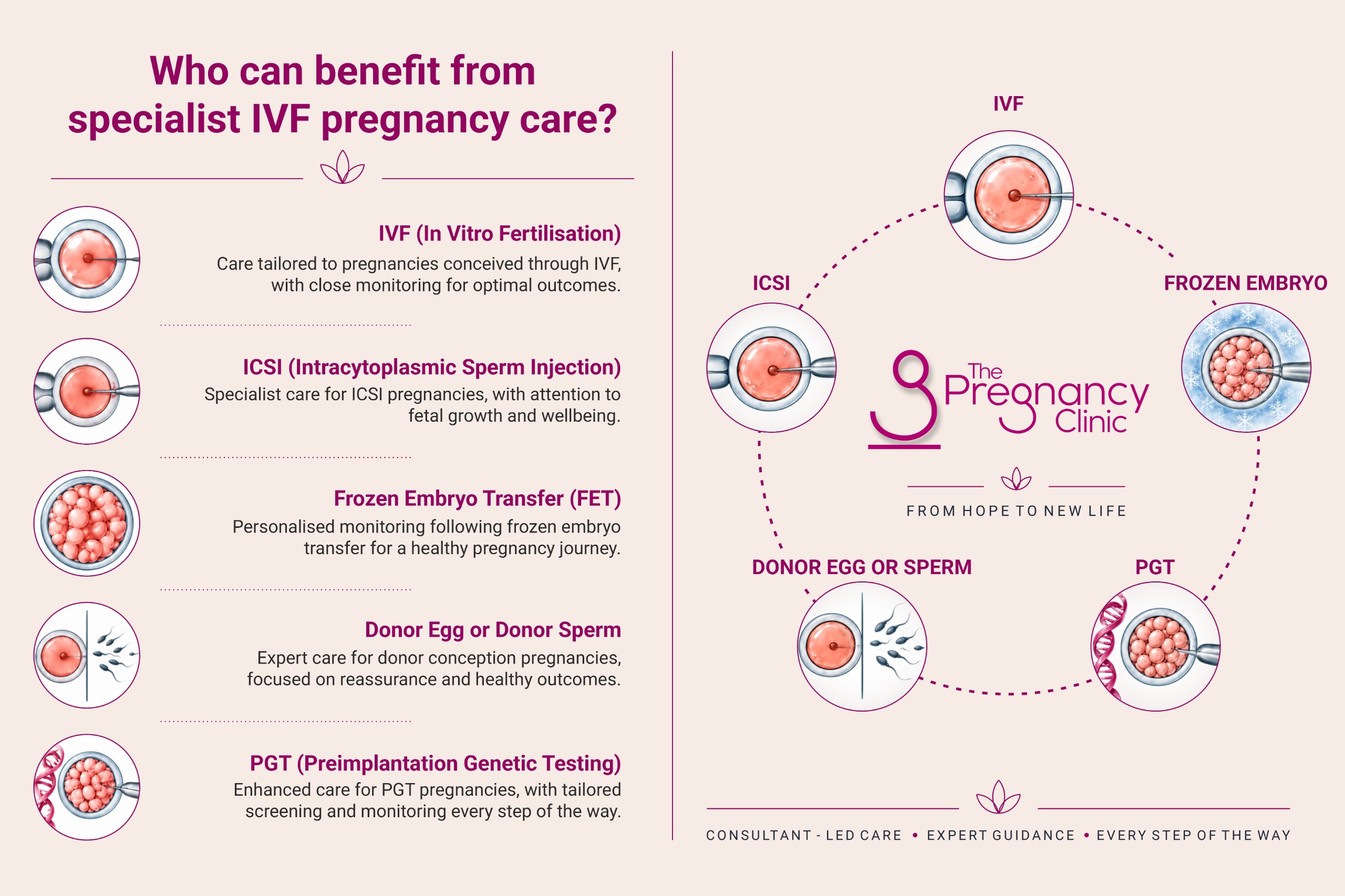
Most IVF pregnancies result in the birth of a healthy baby. However, research has shown that IVF and ICSI pregnancies have a modestly increased risk of complications such as pre-eclampsia, fetal growth restriction, preterm birth, placental disorders and gestational diabetes, particularly in women with additional risk factors. Individualised care and appropriate monitoring help optimise pregnancy outcomes.
Yes. Preimplantation Genetic Testing (PGT) and Non-Invasive Prenatal Testing (NIPT) assess different stages of development and provide complementary information.
PGT is performed before embryo transfer on a small sample of cells taken from the developing embryo. Its primary purpose is to help select embryos with the highest chance of a healthy pregnancy. Although PGT substantially reduces the likelihood of specific chromosome abnormalities or inherited genetic conditions, it is not considered a definitive prenatal test. This is because only a small number of embryonic cells are analysed, and genetic differences between cells (known as mosaicism), technical limitations and rare genetic changes that occur later in development can affect the result.
Once pregnancy is established, NIPT analyses placental DNA circulating in the mother’s bloodstream and remains the most accurate screening test during pregnancy for common chromosome conditions, including Down syndrome (Trisomy 21), Edwards syndrome (Trisomy 18) and Patau syndrome (Trisomy 13).
For these reasons, we recommend discussing NIPT with all couples following IVF or ICSI, including those whose pregnancy was conceived using PGT-tested embryos.
The overall risk remains low, and the vast majority of IVF babies are born healthy. Some studies have shown a slightly increased risk of certain structural abnormalities, although much of this increased risk relates to underlying parental factors rather than the IVF treatment itself. A detailed first trimester assessment and specialist anomaly scan provide comprehensive evaluation of fetal development.
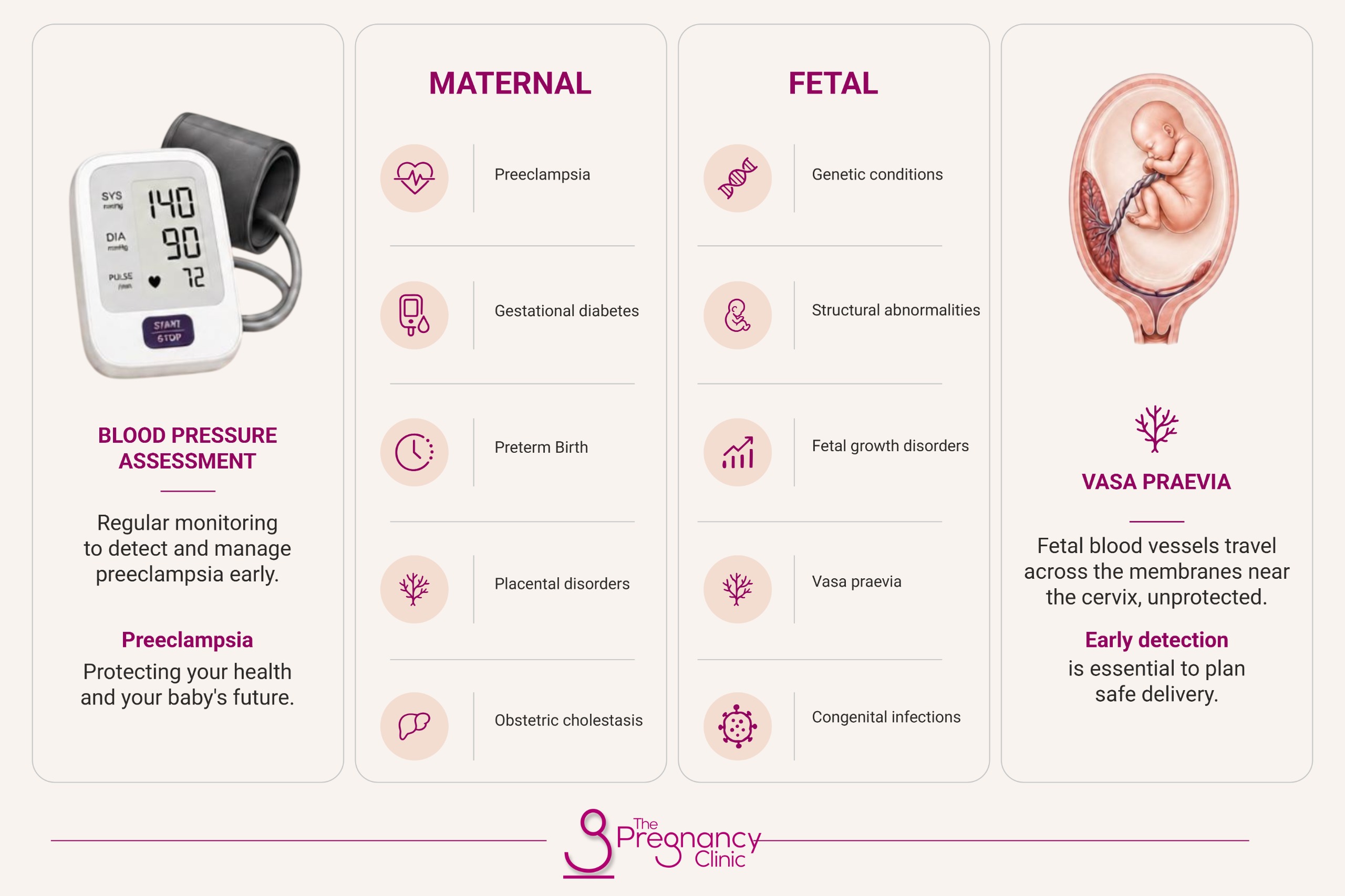
At The Pregnancy Clinic, we offer personalised assessment and screening for complications that may occur more frequently in IVF pregnancies, including:
- Pre-eclampsia
- Gestational diabetes
- Fetal growth restriction
- Placental disorders (including placenta praevia and placenta accreta spectrum)
- Preterm birth
- Obstetric cholestasis
- Vasa praevia where appropriate
- Fetal wellbeing and placental function in the third trimester
The monitoring recommended will depend on your individual pregnancy and medical history.
Yes. Most women with uncomplicated IVF or ICSI pregnancies can expect a normal labour and vaginal birth if there are no obstetric reasons for intervention. Decisions regarding the timing and mode of delivery are based on the progress of the pregnancy, maternal health, fetal wellbeing and any pregnancy complications, rather than IVF treatment alone.
At The Pregnancy Clinic, we provide specialist consultant-led antenatal care throughout pregnancy, including personalised advice on birth planning, the safest mode of delivery and the optimal timing of birth. Our recommendations are tailored to your individual pregnancy and based on the latest evidence and your clinical circumstances.
While we do not currently provide intrapartum (labour and delivery) care, your birth can take place through your NHS maternity unit, where we work alongside your maternity team. If you are considering private maternity care, we can also advise you on the available options and make appropriate recommendations to help you choose the care that best meets your needs.