Twin and multiple pregnancies · Sevenoaks, Kent
Twin Pregnancy Care
Fetal Medicine Consultant-led scans and care for twin pregnancies, planned around the type of twins you are expecting, from your early pregnancy scan to birth.
- Chorionicity confirmed at your first scan
- Each baby assessed individually
- Growth scans planned for your type of twins
- Cost-effective twin scan packages

Medically reviewed by Professor Ranjit Akolekar, MBBS, MD (Res), MRCOG, Consultant in Fetal Medicine and Obstetrics · Last reviewed October 2026
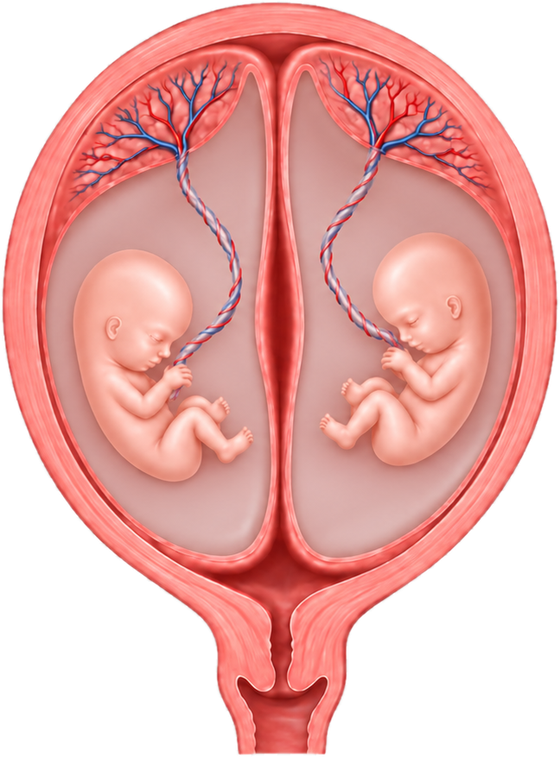
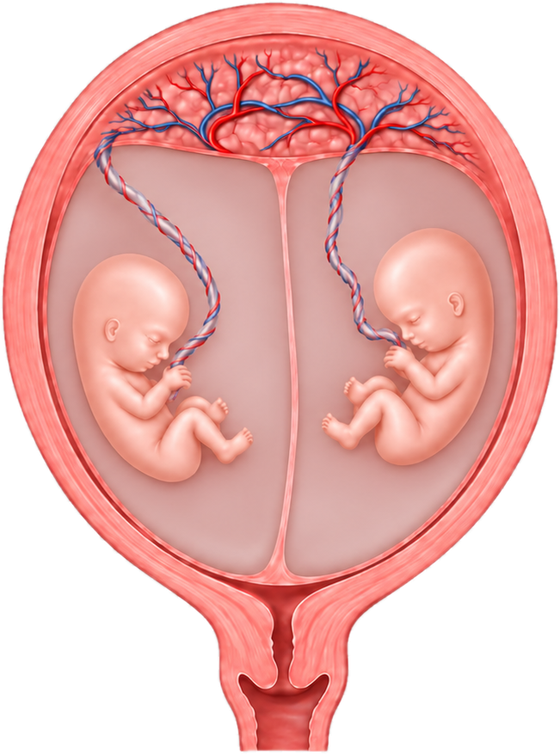
Select Your Type of Twin Pregnancy
(Click to review the pathway unique to each type)
Pathways Unique to Twin Pregnancies
Specialist care for you and both babies, from your first scan to the birth.
Determining chorionicity
The care pathway for a twin pregnancy depends entirely on accurately determining chorionicity, that is, whether the twins share a placenta. We make sure this is done in the first trimester, when it is most reliable.
Combined screening and NIPT
Screening for genetic conditions is different in twin pregnancies and is tailored to each type of twins. We explain the options and what the results mean for each baby, including the implications of NIPT in twin pregnancies.
Assessment of fetal anatomy
Similar to a singleton pregnancy, but it needs more expertise to examine the anatomy and genetic markers of each baby, with a particular focus on congenital heart defects, especially in twins who share a placenta.
Assessment of growth and twin growth discordance
No two babies grow in exactly the same way. Twins may follow a similar growth trajectory, but there can be a difference in growth velocity (discordance), which in some pregnancies can be significant and requires careful monitoring and planning.
Bespoke screening for common complications
Twin pregnancies have a higher chance of anaemia, pre-eclampsia (pregnancy hypertension), gestational diabetes and preterm birth. We offer screening and investigations for these conditions, allowing early identification, prevention and treatment.
Complications unique to twin pregnancies
We look for discordant growth and anatomy, and for complications unique to twins who share a placenta: twin-to-twin transfusion syndrome (TTTS), selective growth restriction and twin anaemia polycythaemia sequence (TAPS).
Why specialist care matters in twin pregnancies
Closer monitoring for both you and your babies.
Most twin pregnancies go well, but complications are more common than with one baby. Regular, detailed scans help us find any problems early, when they can be managed.

Pre-eclampsia (Hypertension)
About three times more common in twin pregnancies, with preterm pre-eclampsia around eight times more common.
Conditions we screen for
Maternal
- Pre-eclampsia
- Gestational diabetes
- Preterm birth
- Anaemia
- Obstetric cholestasis
Fetal
- Genetic conditions
- Congenital birth defects
- Growth discordance
- Vasa praevia
- Shared placentation risks
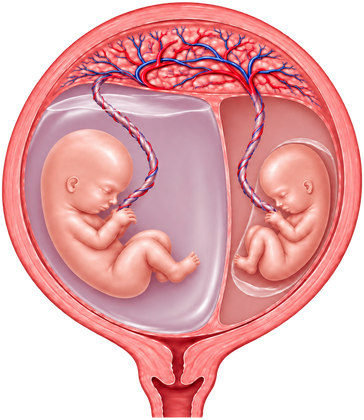
Twin-to-twin transfusion syndrome
In twins who share a placenta, blood flow can become unbalanced. Scans every 2 weeks from 16 weeks help detect it early.
Twin scan prices and packages
Book scans individually, or choose a package and save.
Individual twin scans
Single scan price + £100
- First trimester scan, £350
- Detailed anatomy scan (20–22 weeks), £400
- Growth and Doppler scan, £350
- Each baby assessed individually
Essential twin package
£995
- First trimester scan
- Detailed anatomy scan at 20–22 weeks
- One third-trimester growth scan
- Save £105 on individual prices
Complete twin package
£1,600
- First trimester scan
- Detailed anatomy scan at 20–22 weeks
- Growth and Doppler scans at 28, 32 and 36 weeks
- Save £200 on individual prices
Twins who share a placenta need scans every 2 weeks from 16 weeks. We will plan these with you and your NHS team, and quote for them individually.
Ready to book your twin scan?
Health insurance and self-pay accepted · No GP referral needed
Why choose The Pregnancy Clinic?
Expert care for twin pregnancies, at every step.
Led by Professor Ranjit Akolekar, Consultant in Fetal Medicine and Obstetrics, with over 25 years’ experience in high-risk pregnancy and more than 250 published studies. Read more →
Consultant-led expertise
Every scan is performed by a consultant in fetal medicine.
Continuity of care
Care from the same specialist throughout your pregnancy.
Advanced screening
Access to the latest prenatal screening and investigations.
Specialist ultrasound
Detailed fetal assessment using advanced ultrasound.
Time dedicated to you
Time to answer your questions and discuss your pregnancy.
We work closely with your NHS maternity team where appropriate, and share your reports with your GP and midwife.
What our patients say
Consultant-led care, recommended by our patients.
Twin pregnancy care: your questions answered
How do you know if twins share a placenta?
This is called chorionicity. It is best seen on a scan before 14 weeks, by looking at where the membrane between the babies meets the placenta. It is the most important finding in a twin pregnancy, because it decides how often you need scans.
How often will I need scans?
Twins with separate placentas usually have scans at 12 and 20 weeks, then growth scans every 4 weeks from 24 weeks. Twins who share a placenta usually have scans every 2 weeks from 16 weeks, to look for twin-to-twin transfusion syndrome and growth differences.
Can I have NIPT with twins?
Yes. NIPT can be used to screen for Down’s syndrome in twin pregnancies, and the 12-week scan measures the nuchal translucency of each baby. We will explain the options and what the results mean for twins.
Why do twin scans cost more?
Each baby is examined and measured individually, so twin scans take longer. Our twin packages bring the cost down if you would like scans throughout your pregnancy.
When will my twins be born?
National guidance suggests offering birth from 37 weeks for twins with separate placentas and from 36 weeks for twins who share a placenta, if the pregnancy is uncomplicated. We will discuss timing and place of birth with you and your NHS team.
Do I still see my NHS team?
Yes. Our care works alongside your NHS maternity care, and with your permission we share every report with your midwife or consultant.
Do I need a referral?
No. You can book directly with us. Health insurance and self-pay are both accepted.
More answers in our private maternity FAQs and NIPT FAQs.
Prefer to speak to us?
Our patient care team is happy to answer your questions and help you choose the right appointment.
01732 647072Call us07572 929888Message us on WhatsAppcare@thepregnancyclinic.comEmail our care teamOpening hoursTuesday 9am–8pm · Thursday 9am–5pm · Saturday 9am–7pm. Other days on request.
Find usThe Highland Suite, Great Hollanden Business Centre, Mill Lane, Underriver, Sevenoaks, Kent TN15 0SQ
Directions and parking →