The Pregnancy Clinic

Monochorionic Twin Pregnancies

Care pathway at The Pregnancy Clinic

  • Consultant-led detailed scans for both babies
  • Comprehensive investigations at every stage
  • Early diagnosis, prevention and treatment
  • Care usually with your local or tertiary
    fetal medicine team
  • Scan findings shared with your
    NHS fetal medicine team
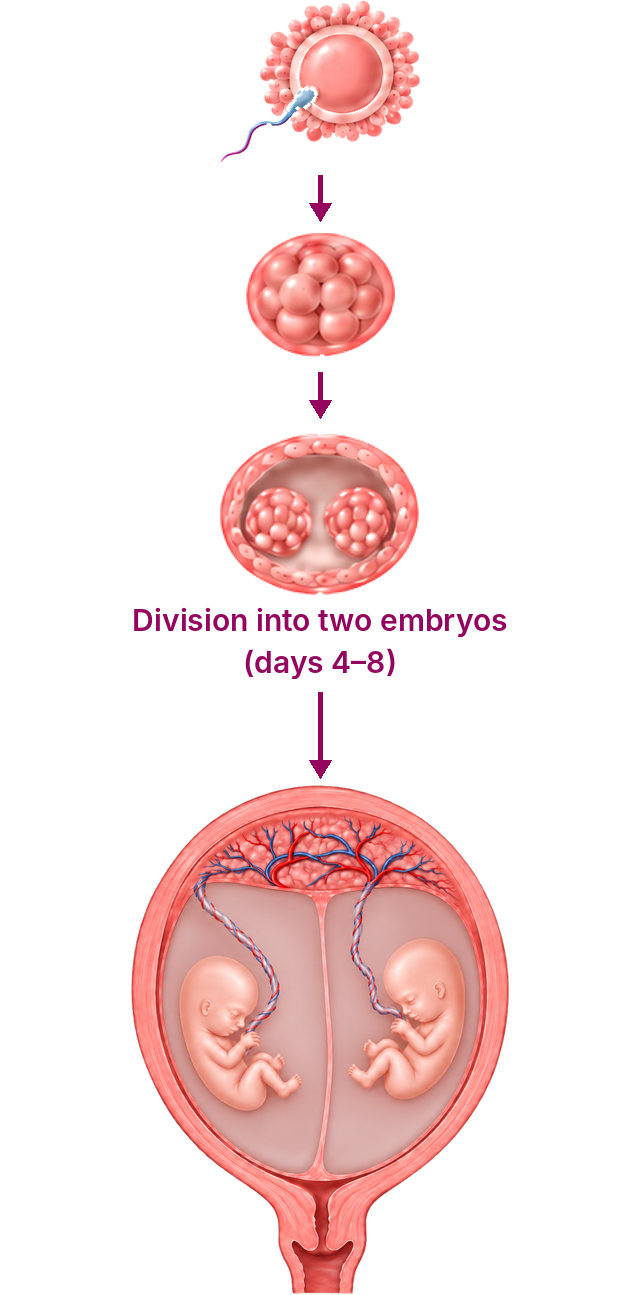
Monochorionic
diamniotic
(MCDA)
Shared placenta, two separate sacs
Monochorionic diamniotic twins: one fertilised egg divides between days 4 and 8, giving twins who share one placenta but have separate sacs
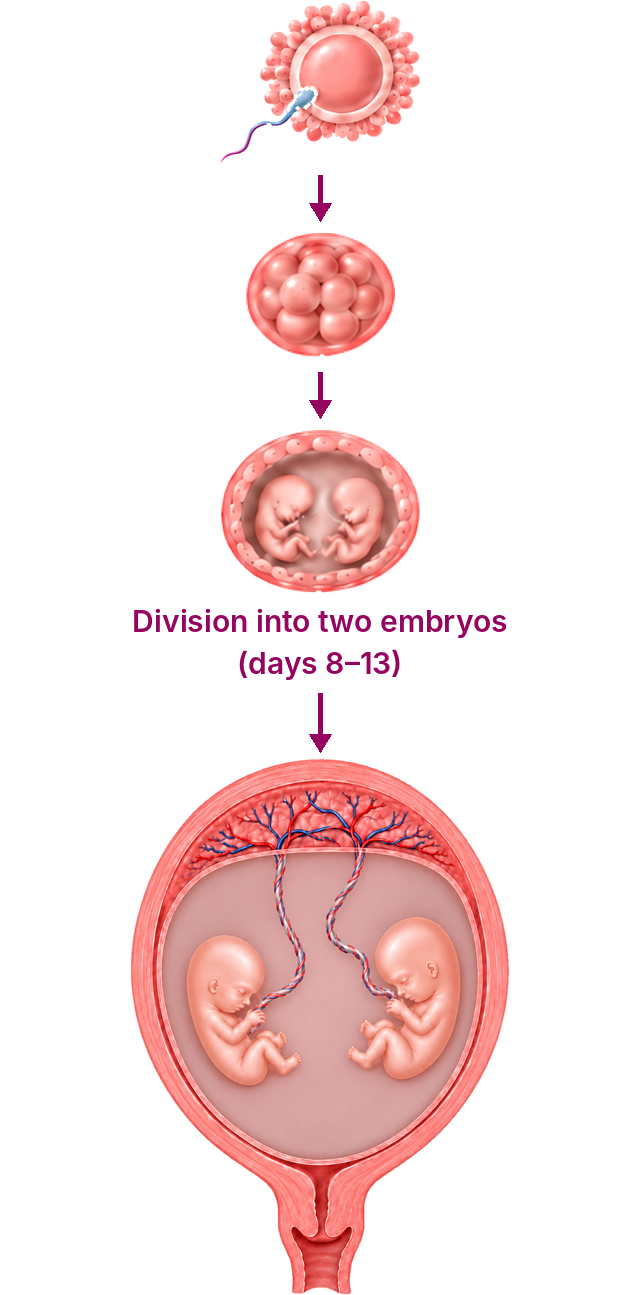
Monochorionic
monoamniotic
(MCMA)
Shared placenta, one shared sac
Monochorionic monoamniotic twins: one fertilised egg divides between days 8 and 13, giving twins who share one placenta and one sac

Key features of monochorionic twin pregnancy

  • Monochorionic twins are always identical (monozygotic)
  • The twins share one placenta, with blood vessels connecting their circulations
  • Most are diamniotic (MCDA), with each baby in its own sac. Rarely, both babies share one sac (MCMA)
  • Chorionicity should be checked before 14 weeks to confirm if twins are monochorionic
  • Higher risk of complications than dichorionic twins, such as TTTS, selective growth restriction and TAPS
  • Scans every 2 weeks from 16 weeks help detect complications early
  • Rare types of monochorionic twins include conjoined twins and twin reversed arterial perfusion (TRAP) sequence (acardiac twins)

Timeline of Appointments

Your monochorionic twin care pathway at The Pregnancy Clinic.

  1. 7–10weeks

    Early pregnancy scan

    • Early pregnancy scan
    • Comprehensive booking blood tests
  2. 11–13weeks

    First trimester scan

    • Chorionicity and amnionicity
    • NIPT or combined test
    • Pregnancy dating
    • Fetal anatomy
  3. 16–18weeks

    Scans every 2 weeks begin

    • Growth assessment
    • Amniotic fluid volume
    • Fetal bladders
    • Cervical length assessment
    • Doppler assessment of blood flows
    • Screening for TTTS, TAPS and sFGR
  4. 20–22weeks

    Detailed anatomy scan

    • Fetal growth
    • Detailed anatomy
    • Fetal heart assessment
    • Placental localisation
    • Umbilical cord insertions
    • Fetal bladders
    • Fetal Doppler assessment
    • Screening for TTTS, TAPS and sFGR
    • Cervical assessment
  5. 24–34weeks

    Growth scans every 2 weeks

    • Growth assessment
    • Assessment of growth discordance
    • Amniotic fluid volume
    • Doppler assessment of blood flow
    • Screening for TTTS, TAPS and sFGR

    Also: Blood tests at 28 weeks for anaemia and gestational diabetes, if indicated

  6. 36weeks

    Delivery

    Timing: MCDA twins from 36 weeks. MCMA twins usually between 32 and 34 weeks

Have a question? Need an appointment?

Send us a message and our team will reply during clinic hours. No booking or deposit needed.

    We provide planned appointments only. If you have pain, bleeding, contractions, leakage of fluid, reduced baby movements or any other urgent concern, please contact your local NHS maternity unit or Early Pregnancy Unit, NHS 111 or your GP, or attend A&E. In a life-threatening emergency, call 999.

    Prefer to speak to us?

    Our patient care team is happy to answer your questions and help you choose the right appointment.

    01732 647072Call us07572 929888Message us on WhatsAppcare@thepregnancyclinic.comEmail our care team

    Opening hoursTuesday 9am–8pm · Thursday 9am–5pm · Saturday 9am–7pm. Other days on request.

    Find usThe Highland Suite, Great Hollanden Business Centre, Mill Lane, Underriver, Sevenoaks, Kent TN15 0SQ
    Directions and parking →
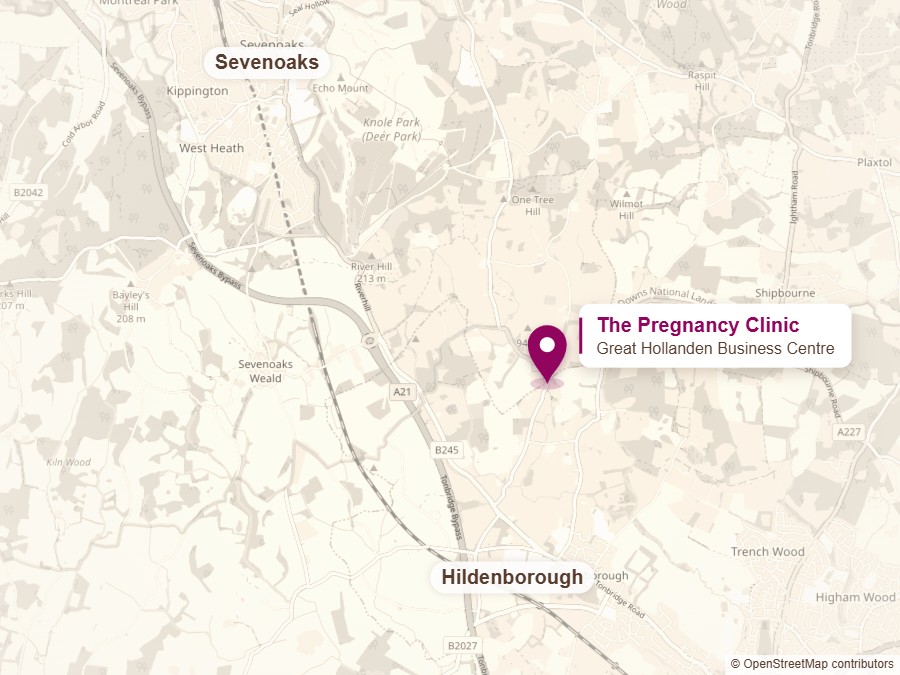
    Map showing The Pregnancy Clinic at Great Hollanden Business Centre, between Sevenoaks and Hildenborough