Around 8 in 100 babies in the UK are born prematurely, before 37 weeks of pregnancy. Most premature babies do well, but those born very early, particularly before 32 weeks, are at greater risk of complications.
Many women who have a premature birth have no warning signs beforehand. Measuring the length of the cervix with an ultrasound scan in the middle of pregnancy is one of the most effective ways of finding women at higher risk.
A short cervix is linked to a higher chance of premature birth, and effective treatments are available to help reduce this risk.
At The Pregnancy Clinic, we offer consultant-led cervical length assessment, with personal advice based on your pregnancy history and scan findings.
Key points
- Cervical length is measured with a quick, safe and usually painless internal (transvaginal) scan.
- A short cervix is one of the strongest warning signs of early premature birth.
- A cervical length of 25 mm or less before 24 weeks is generally considered short.
- Vaginal progesterone can reduce the risk of premature birth in women with a short cervix.
- A cervical stitch (cerclage) may be recommended in some pregnancies.
- If you have risk factors, assessment may be helpful from 16 weeks. If you have none, we offer screening at 20–22 weeks.
- A short cervix does not necessarily mean your baby will be born early.
What is preterm birth and why does it matter?
A baby born before 37 weeks of pregnancy is described as preterm or premature. The World Health Organization (WHO) groups preterm births by how early the baby is born:
- Extremely preterm: before 28 weeks.
- Very preterm: 28 to 32 weeks.
- Moderate to late preterm: 32 to 37 weeks.
Preterm birth can also be grouped by why the baby is born early:
- Spontaneous: labour starts naturally, or the waters break early.
- Medically indicated: doctors recommend an early delivery because of a problem affecting the mother or baby, such as a small baby, pre-eclampsia (high blood pressure in pregnancy) or bleeding.
The earlier a baby is born, the higher the chance of complications. Babies born before 32 weeks have a much higher risk of serious problems than those born later.
This is why it is important to find pregnancies at higher risk early, so that treatment can help prevent premature birth or delay it to a safer stage.
What does cervical length show?
The cervix is the neck of the womb, which connects the womb to the vagina.
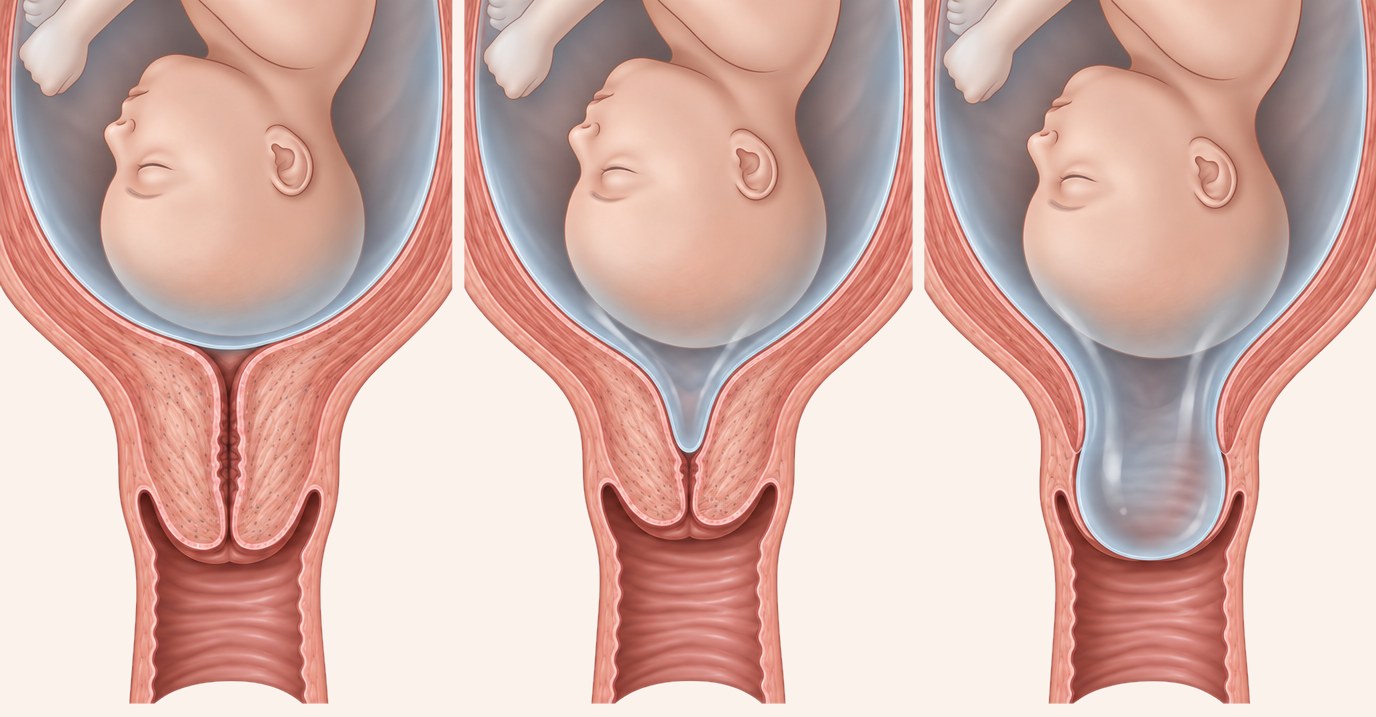
In pregnancy, the cervix normally stays long and closed until labour approaches. In some women, it starts to shorten or open much earlier, sometimes several weeks before premature labour begins.
The shorter the cervix, the higher the risk of early delivery.
Screening is valuable because shortening can be found before you have any symptoms, when treatment is still likely to help.
How is cervical length measured?
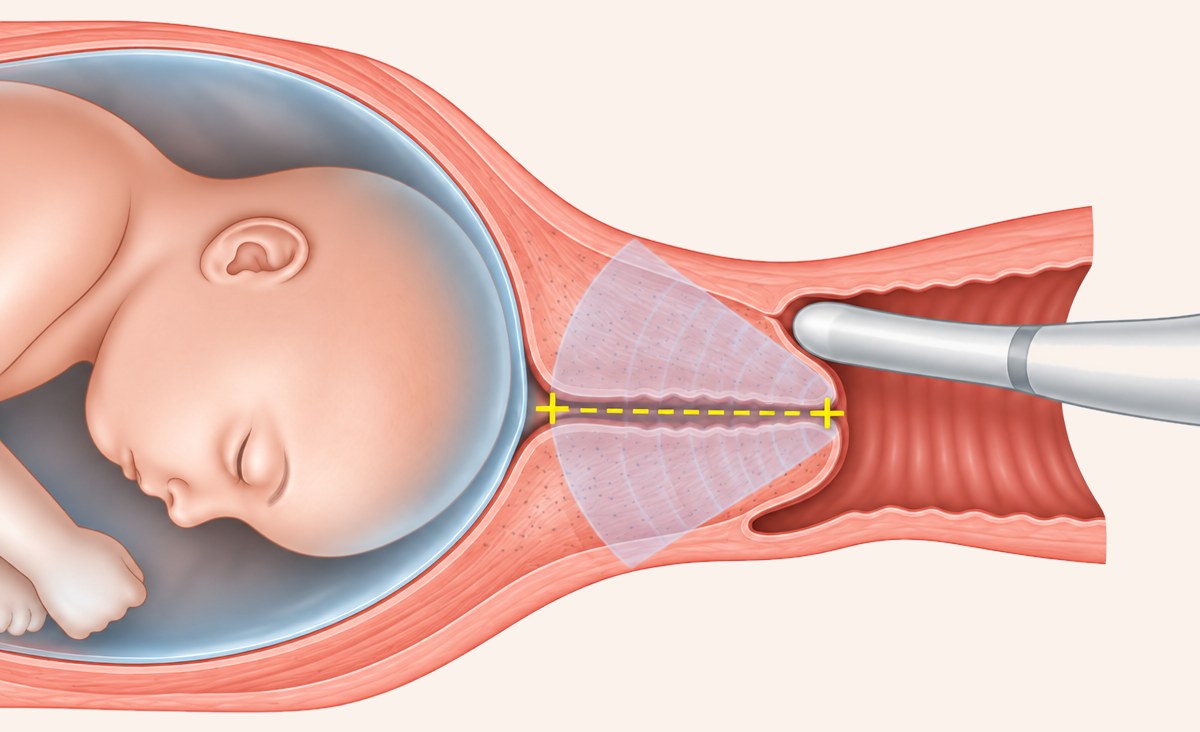
The most accurate way to measure the cervix is with an internal (transvaginal) ultrasound scan. A slim probe is gently placed in the vagina to get a clear picture of the cervix, and its length is measured.
The scan:
- takes only a few minutes
- is done with an empty bladder
- is generally comfortable and not painful
- is safe for you and your baby, and does not cause miscarriage or premature birth.
We also check the shape of the cervix and whether its inner end has started to open (sometimes called funnelling).
The cervix can sometimes be seen on a tummy scan, but an internal scan is more reliable, especially when the cervix is short.
© The Pregnancy Clinic
When should cervical length be assessed?
Cervical length is most useful when measured between 16 and 24 weeks of pregnancy.
Your risk of premature birth is higher if you have had:
- a previous premature birth
- a late miscarriage, particularly from 16 weeks onwards
- surgery to the cervix, such as LLETZ or a cone biopsy
- a caesarean section when the cervix was fully open
It is also higher if you have certain differences in the shape of the womb, or are expecting twins.
At The Pregnancy Clinic, we recommend
- If you have risk factors: cervical length assessment from around 16 weeks, with repeat scans when needed, usually until 24 weeks.
- If you have no risk factors: cervical length screening at 20–22 weeks, which can be done at the same appointment as your 20-week scan.
If you have had a very early premature birth, major surgery to the cervix or other complex risk factors, we may suggest an individual monitoring plan.
What is a normal cervical length at 20 weeks?
At around 20–22 weeks, the cervix usually measures between 25 and 40 mm, with an average of around 30–32 mm. This varies between women.
A cervical length of more than 25 mm is generally reassuring. However, cervical length is a sliding scale rather than a simple pass or fail: for example, a 35 mm cervix carries a lower risk than a 25 mm cervix.
Your result is always interpreted alongside your pregnancy history, how many weeks pregnant you are and any previous scans. A normal result lowers your risk, but does not remove it completely.
What is a short cervix?
A cervical length of 25 mm or less before 24 weeks is generally described as short. The shorter the cervix, the greater the risk: for example, a 10 mm cervix carries a much higher risk than a 24 mm cervix.
Research from the Fetal Medicine Foundation has shown a strong link between cervical length at 20–24 weeks and the risk of early premature birth. Only a small number of women have a short cervix, but this group accounts for a large share of early premature births.
A short cervix does not mean that labour is about to start. It does mean that you need careful assessment to decide whether treatment or extra monitoring would help.
© The Pregnancy Clinic
Can the cervix shorten without symptoms?
Yes. Many women with a short cervix feel completely well, with no pain, tightenings, unusual discharge or pressure. The cervix can shorten gradually over several weeks without you noticing anything.
This is the main reason why screening is valuable: a scan can find women at higher risk early, when treatment is most likely to work.
What treatments can reduce the risk?
The best treatment depends on the length of your cervix, your previous pregnancies and whether you are expecting one baby or twins.
Vaginal progesterone
Vaginal progesterone is one of the most effective treatments for women with a short cervix who are expecting one baby. It is a daily pessary or capsule placed in the vagina, usually continued until around 34–36 weeks.
Cervical stitch (cerclage)
A cervical stitch is a small operation in which a stitch is placed around the cervix to help keep it closed. It may be recommended if you have had a previous premature birth or late miscarriage, particularly if your cervix becomes short in this pregnancy.
A stitch may also be considered if your cervix continues to shorten despite progesterone treatment.
The choice of progesterone, a stitch or both is made individually and discussed with you in detail.
Does a short cervix mean my baby will be born prematurely?
No. A short cervix means a higher risk, not a certainty. Many women with a short cervix still deliver at or near full term, particularly with the right treatment.
Your chance of premature birth depends on:
- how short the cervix is
- how many weeks pregnant you are when it is found
- whether it continues to shorten or starts to open
- your previous pregnancies
- whether you are expecting one baby or twins.
Equally, some women with a normal cervical length still have a premature birth. Screening helps to estimate your risk and decide whether treatment would help, but it cannot predict exactly when your baby will be born.
When should I seek urgent help?
Contact your NHS maternity assessment unit straight away if you have:
- regular tightenings or contractions
- period-like tummy pains that do not go away
- new or increasing pressure in your pelvis
- lower back pain with tightenings or cramps
- a gush or steady leak of fluid from the vagina
- vaginal bleeding.
These symptoms do not always mean labour has started, but they need to be checked promptly.
Do not wait for a planned cervical length scan if you have any of these symptoms.
Frequently asked questions
Is the cervical length scan painful or risky?
The scan is usually painless, although some women find it slightly uncomfortable. It takes only a few minutes and is safe for you and your baby. It does not cause miscarriage, infection or premature labour.
Can I have my cervical length checked at my 20-week scan?
Yes. If you have no risk factors, cervical length screening can be done at the same appointment as your 20-week scan, at 20–22 weeks. If you have risk factors, we recommend starting earlier, from around 16 weeks.
Should I avoid exercise, sex or work if I have a short cervix?
Not necessarily. Bed rest has not been shown to prevent premature birth and is generally not recommended. Long periods of inactivity can also increase the risk of blood clots and muscle weakness.
Advice about exercise, sex, travel and work is tailored to you, based on your cervical length, any symptoms, your previous pregnancies and any treatment you are having.
Will I need repeat cervical length scans?
This depends on your risk factors and your first result.
If you have had a previous premature birth or have important risk factors relating to the cervix, repeat scans between 16 and 24 weeks may be helpful.
If your cervix is normal and you have no other risk factors, further scans are usually not needed.
If your cervix is short or borderline, a repeat scan may be recommended to check for changes and guide treatment.
Routine checks after 24 weeks are generally less useful for deciding on treatment, although they may be helpful in some situations.
Is vaginal progesterone safe for my baby?
Yes. Progesterone is a natural pregnancy hormone. Studies following children whose mothers used vaginal progesterone have not shown any harmful effects on their health or development. Some women notice mild side effects, such as vaginal discharge or irritation.
What if I am expecting twins?
Twin pregnancies have a higher risk of premature birth. Progesterone and a cervical stitch are not routinely recommended for all twin pregnancies, so the cervical length, your history and the type of twin pregnancy are assessed individually to decide on the best plan.
What happens if my cervix is found to be short?
We explain the result to you on the day and discuss whether treatment, such as vaginal progesterone, would be helpful. We may suggest a repeat scan, and we liaise with your NHS maternity team or local preterm birth clinic where needed.
Cervical length screening at The Pregnancy Clinic
At The Pregnancy Clinic in Sevenoaks, Kent, cervical length assessment is part of our consultant-led pregnancy scan service. Our approach includes:
- accurate measurement of the cervix with an internal scan
- assessment of your individual risk factors
- a clear explanation of your results
- personal recommendations for treatment or further monitoring
- liaison with NHS maternity and preterm birth services when needed.
Cervical length can be checked at a dedicated appointment or combined with another suitable pregnancy scan.
Book a cervical length scan
If you have had a premature birth or surgery to the cervix before, or would simply like reassurance about your risk, you can arrange an assessment at The Pregnancy Clinic.
Book a cervical length scan →The Pregnancy Clinic provides planned appointments only. If you have pain, bleeding, leaking fluid or any other urgent concern, please contact your local NHS maternity unit or NHS 111 straight away.
Related pregnancy guides
Clinical references
- NHS. Premature labour and birth
- World Health Organization. Preterm birth. WHO fact sheet
- NICE. Preterm labour and birth. NICE guideline NG25
- NICE. Twin and triplet pregnancy. NICE guideline NG137
- Iams JD, Goldenberg RL, Meis PJ, et al. The length of the cervix and the risk of spontaneous premature delivery. N Engl J Med 1996;334:567–72
- Heath VCF, Southall TR, Souka AP, Elisseou A, Nicolaides KH. Cervical length at 23 weeks of gestation: prediction of spontaneous preterm delivery. Ultrasound Obstet Gynecol 1998;12:312–7
- Fonseca EB, Celik E, Parra M, Singh M, Nicolaides KH. Progesterone and the risk of preterm birth among women with a short cervix. N Engl J Med 2007;357:462–9
- Romero R, Nicolaides KH, Conde-Agudelo A, et al. Vaginal progesterone decreases preterm birth ≤ 34 weeks of gestation in women with a singleton pregnancy and a short cervix: an updated meta-analysis including data from the OPPTIMUM study. Ultrasound Obstet Gynecol 2016;48:308–17
This guide provides general information and does not replace individual medical advice. Recommendations may vary according to your pregnancy history, ultrasound findings and clinical circumstances.