Menu
Close
Menu
Close
Nuchal Scan
A comprehensive first trimester assessment – More than just pregnancy dating and screening for genetic conditions
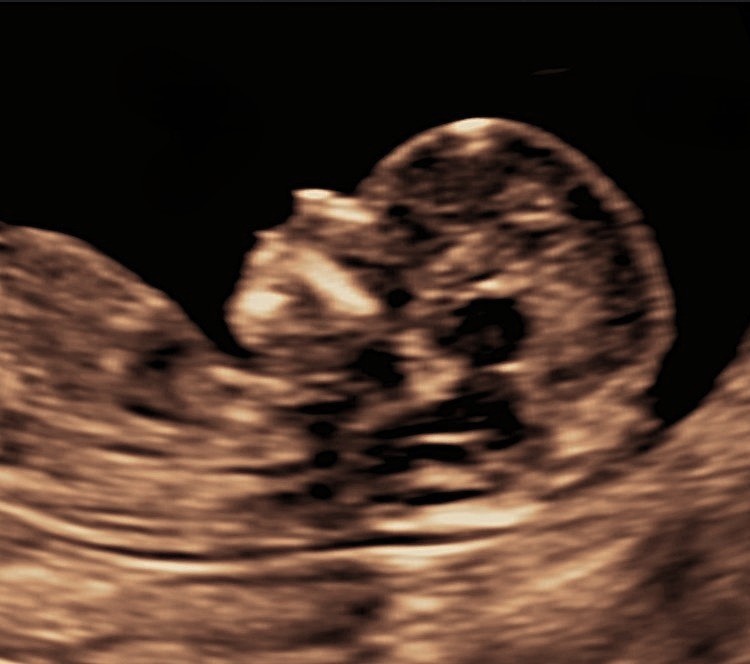
The nuchal scan is one of the most important early appointments in pregnancy and is performed between 11 and 13 weeks. It provides a comprehensive assessment of the health and wellbeing of the pregnancy, including a personalised evaluation of the risk of common pregnancy-related conditions.
At The Pregnancy Clinic, the nuchal scan goes beyond confirming dates and screening for genetic conditions. We carry out a detailed early assessment of your baby’s development and offer evidence-based screening for pregnancy complications such as pre-eclampsia and fetal growth restriction, allowing timely reassurance and proactive care planning.
Book your consultant-led nuchal scan today for expert assessment, early reassurance, and personalised pregnancy care.

FAQs
What are the objectives of a Nuchal scan?
The nuchal scan is a comprehensive early assessment of baby’s development:
- Confirm the number of babies (singleton or multiple pregnancy)
- Provide accurate dating of the pregnancy and estimate the due date
- Assess the baby’s early development and wellbeing
- Screen for common genetic conditions (Trisomy 21, 18 and 13)
- Identify or confidently exclude major birth defects detectable at this stage
- Undertake combined screening for preeclampsia
- Assess the risk of fetal growth restriction later in pregnancy
This scan forms a key part of a holistic early pregnancy assessment
What is combined screening for genetic conditions?
Combined screening is a personalised risk assessment for common genetic conditions such as Downs syndrome (Trisomy 21). It uses information from:
- Maternal factors, including age
- Ultrasound findings, specifically:
- Crown–rump length (the baby’s length from head to bottom)
- Nuchal translucency (the fluid space behind the baby’s neck)
- Blood tests, measuring two placental proteins:
- Free β-hCG
- PAPP-A
These factors are combined to calculate a personalised chance of the baby being affected by Trisomy 21, Trisomy 18 or Trisomy 13.
How effective and accurate is combined screening?
Combined screening is a well-established and effective screening test:
- Detection rate: approximately 85–90%, depending on operator expertise
- False-positive rate: around 2–3% (normal pregnancies classified as higher risk)
- False-negative rate: approximately 10–15%, (affected pregnancies classified as low risk)
It is important to note that combined screening is a screening test, not a diagnostic test, and results should always be interpreted in context and discussed with a specialist.
Which birth defects can be checked for at Nuchal scan?
Although this scan is performed early in pregnancy, many major fetal structures have already formed. At this stage, it is possible to assess and, in most cases, rule out serious abnormalities involving:
- The skull and brain
- The spine (including open spina bifida)
- The heart (major structural heart defects)
- The abdominal wall
- The limbs
While not all conditions can be excluded at this stage, the nuchal scan provides valuable early reassurance and identifies pregnancies that may benefit from further specialist assessment.
Can I have screening for preeclampsia and how is it undertaken?
Yes. Effective combined screening for pre-eclampsia can be performed during the nuchal scan visit. This assessment uses:
- Maternal medical and obstetric history
- Blood pressure measurements
- Ultrasound Doppler assessment of placental blood flow
- Maternal blood tests (PAPP-A)
This approach can accurately identify women at increased risk of developing preeclampsia. There is strong evidence that women identified as high risk can benefit from early initiation of low-dose aspirin, which may reduce the risk or delay the onset of the condition.
I have had NIPT, do I still need a Nuchal scan?
Yes. While NIPT is highly accurate for screening for Trisomy 21, 18 and 13, it does not assess:
- The baby’s overall anatomical development
- Major structural birth defects
- Placental development or function
- Risks such as preeclampsia or fetal growth restriction
The nuchal scan provides a comprehensive early assessment of fetal anatomy and placental health, which is essential even if NIPT has already been performed.
Do I need a full bladder for the scan?
In most pregnancies, the nuchal scan is performed transabdominally (through the abdomen), and a full bladder is not required. Occasionally, if clear views cannot be obtained, a transvaginal (internal) scan may be recommended to ensure accurate assessment. This will always be discussed with you beforehand.
Difference between NHS, high-street providers and our Consultant-led care?
| Feature |
NHS Care Pathway |
High-Street Scan Providers |
Our Consultant-Led Care Pathway |
|---|---|---|---|
|
Primary purpose |
Population-based antenatal screening |
Reassurance and keepsake imaging |
Comprehensive medical assessment |
|
Who performs the scan |
Sonographer |
Sonographer |
Consultant in Fetal Medicine |
|
Appointment duration |
Short, standardised |
Variable |
Longer, unhurried consultation |
|
Accurate pregnancy dating |
✅ |
✅ |
✅ |
|
Assessment of fetal development/ |
Basic |
Limited |
Detailed and systematic |
|
Screening for Trisomy 21, 18, 13 |
✅ Combined screening |
❌ |
✅ Combined screening ± NIPT |
|
Nuchal translucency measurement |
✅ |
Variable |
✅ Expert assessment |
|
Early detection of major birth defects |
Limited by time and remit |
❌ |
✅ Advanced early anatomy review |
|
Placental assessment |
Limited |
❌ |
✅ Including Doppler studies |
|
Blood tests available on site |
✅ |
❌ |
✅ |
|
Immediate clinical interpretation |
Limited |
❌ |
✅ Consultant-led discussion |
|
Continuity of care |
Variable |
❌ |
✅ Consistent consultant oversight |
|
Follow-up and pregnancy planning |
According to NHS pathways |
❌ |
✅ Individualised and proactive |
|
Suitable as sole medical screening |
✅ |
❌ |
✅ |
|
Commonly used to complement NHS care |
|
Sometimes |
✅ Very commonly |