Menu
Close

Menu
Close
Blood Investigations
We provide a comprehensive and flexible programme of pregnancy-specific blood investigations, extending beyond standard antenatal tests to include enhanced screening where clinically appropriate.
Blood tests may be undertaken as part of a structured private antenatal care pathway or requested as individual, one-off investigations. Blood investigations available at The Pregnancy Clinic include the following. All blood test results are reviewed by a consultant, with clear explanation, interpretation, and evidence-based follow-up advice provided.
Please click for more details:

Booking blood tests – Standard
- Full blood count
- Blood group and Rhesus type
- Atypical red cell antibodies
- Haemoglobinopathy screening
- Rubella, Varicella, Hepatitis, HIV and Syphilis infection tests
Booking blood tests – Advanced
- Full blood count
- Blood group and Rhesus type
- Atypical red cell antibodies
- Haemoglobinopathy screening
- Rubella, Varicella, Hepatitis, HIV and Syphilis infection tests
- Thyroid function tests
- Testing for serum glucose and HbA1C
- Congenital infections (toxoplasma, CMV and parvovirus)
Non-invasive prenatal testing (NIPT)
A highly accurate blood test analysing fetal DNA in maternal blood to assess the risk of common chromosomal conditions, offered with consultant-led counselling and interpretation.
- NIPT for gender
- NIPT for common trisomies (13, 18 and 21)
- NIPT for common trisomies (13, 18 and 21) plus sex chromosomal aneuploidies (Turner, Klinefelter and Jacobs)
- NIPT for common trisomies (13, 18 and 21) plus sex chromosomal aneuploidies (Turner, Klinefelter and Jacobs) PLUS 6 key microdeletion syndromes
- NIPT for common trisomies (13, 18 and 21) plus sex chromosomal aneuploidies (Turner, Klinefelter and Jacobs) PLUS 6 key microdeletion syndromes
First trimester blood tests (combined screening for common trisomies)
Blood tests used alongside ultrasound assessment to provide early pregnancy risk screening for common chromosomal abnormalities including
- free β-human chorionic gonadotropic (hCG)
- Pregnancy associated plasma protein-A (PAPP-A)
Blood tests to screen for pre-eclampsia
Targeted testing to support early identification of women at increased risk of pre-eclampsia, enabling preventative strategies and enhanced surveillance.
Thyroid function tests
Assessment of thyroid status in pregnancy, particularly important for maternal wellbeing and fetal development. These include:
- Thyroid stimulating hormone (TSH)
- T3
- T4
Tests for maternal anaemia (folate, vitamin B12 and iron studies)
Comprehensive evaluation of nutritional deficiencies and anaemia to guide appropriate supplementation and management.
Congenital infection screening
Blood tests to screen for infections that may have implications for pregnancy and fetal health, undertaken when clinically indicated. These specifically include directed testing for:
- Toxoplasma
- CMV
- Parvovirus
Gestational diabetes mellitus testing
Blood tests to assess glucose regulation in pregnancy, supporting early diagnosis and management of gestational diabetes. These include:
- HbA1C
- Glucose tolerance test
Obstetric cholestasis testing
Targeted blood tests to assess for obstetric cholestasis in women with suggestive symptoms or risk factors, supporting timely diagnosis and management. These include:
- Liver function tests
- Serum bile acids
Urine Investigations
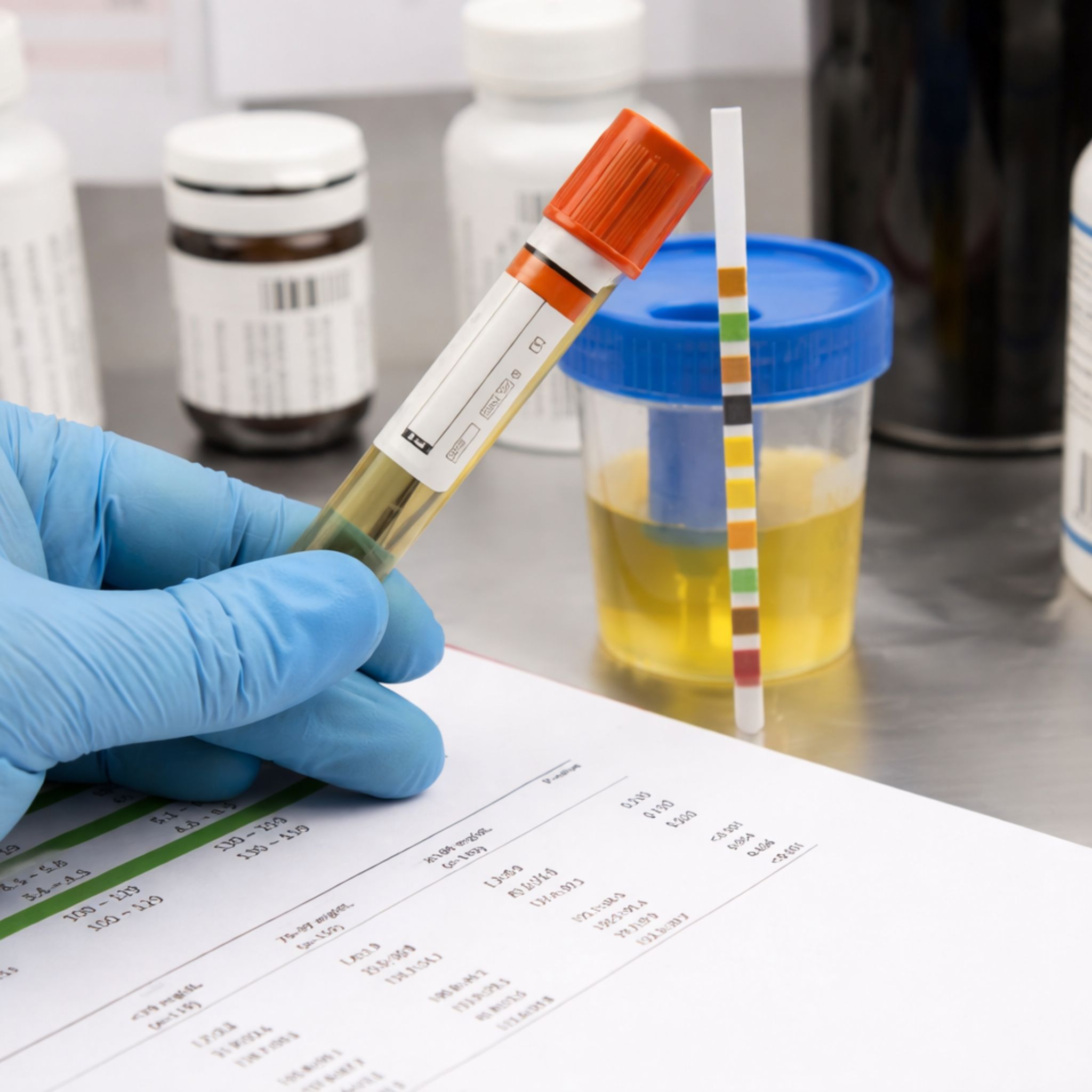
Urine investigations form a core component of antenatal surveillance at The Pregnancy Clinic and are offered as part of planned private antenatal care or as ad hoc testing when clinically indicated.
Urinary tract infections (UTIs) are common in pregnancy, and screening at key time points is important. In addition to causing maternal symptoms and discomfort, UTIs are associated with an increased risk of ascending infection involving the cervix and uterine cavity. This may contribute to adverse pregnancy outcomes, including prelabour rupture of membranes and preterm delivery. Importantly, even subclinical infection of the urinary tract, known as asymptomatic bacteriuria, can be associated with these complications if not identified and treated appropriately.
All urine investigation results are reviewed by a Consultant in Fetal-Maternal Medicine, with clear explanation, interpretation, and evidence-based management advice provided. Urine investigations available at The Pregnancy Clinic include:
Routine urine dipstick testing
Screening for protein, glucose, ketones, and markers of infection to support early identification of urinary tract infection, hypertensive disorders of pregnancy, and glycosuria.
Mid-stream urine (MSU) testing for microscopy, culture and sensitivity
Laboratory-based assessment to detect both symptomatic and asymptomatic urinary tract infection, enabling accurate diagnosis and targeted antibiotic treatment where required.
Targeted and repeat urine testing
Ongoing surveillance for women with recurrent UTIs, previous preterm birth, prelabour rupture of membranes, or other pregnancy-related risk factors.
Vaginal Swab Screening
Vaginal swab screening is offered as part of consultant-led private antenatal care or as ad hoc testing where clinically indicated or requested.
Alterations in the vaginal microbiome and untreated vaginal infections during pregnancy may be associated with ascending infection, prelabour rupture of membranes, preterm birth, and neonatal infection. Targeted screening allows early identification and treatment, particularly in women with previous pregnancy complications, symptoms suggestive of infection, or identified risk factors.
All vaginal swab results are reviewed by a Consultant in Fetal-Maternal Medicine, with clear explanation, interpretation, and evidence-based management advice provided. Vaginal swab investigations available at The Pregnancy Clinic include:
Screening for bacterial vaginosis (BV)
Assessment for imbalance of vaginal flora, which may be associated with an increased risk of preterm birth in specific clinical contexts.
Group B streptococcus (GBS) screening
Targeted screening to inform pregnancy management and delivery planning, particularly in women with previous GBS-related pregnancy or neonatal complications.
Symptom-directed vaginal swab testing
Investigation of abnormal discharge, irritation, or discomfort to allow accurate diagnosis and evidence-based treatment.
Repeat or follow-up vaginal swabs
Where indicated, to confirm resolution of infection or provide ongoing surveillance in women at increased risk of pregnancy complications.